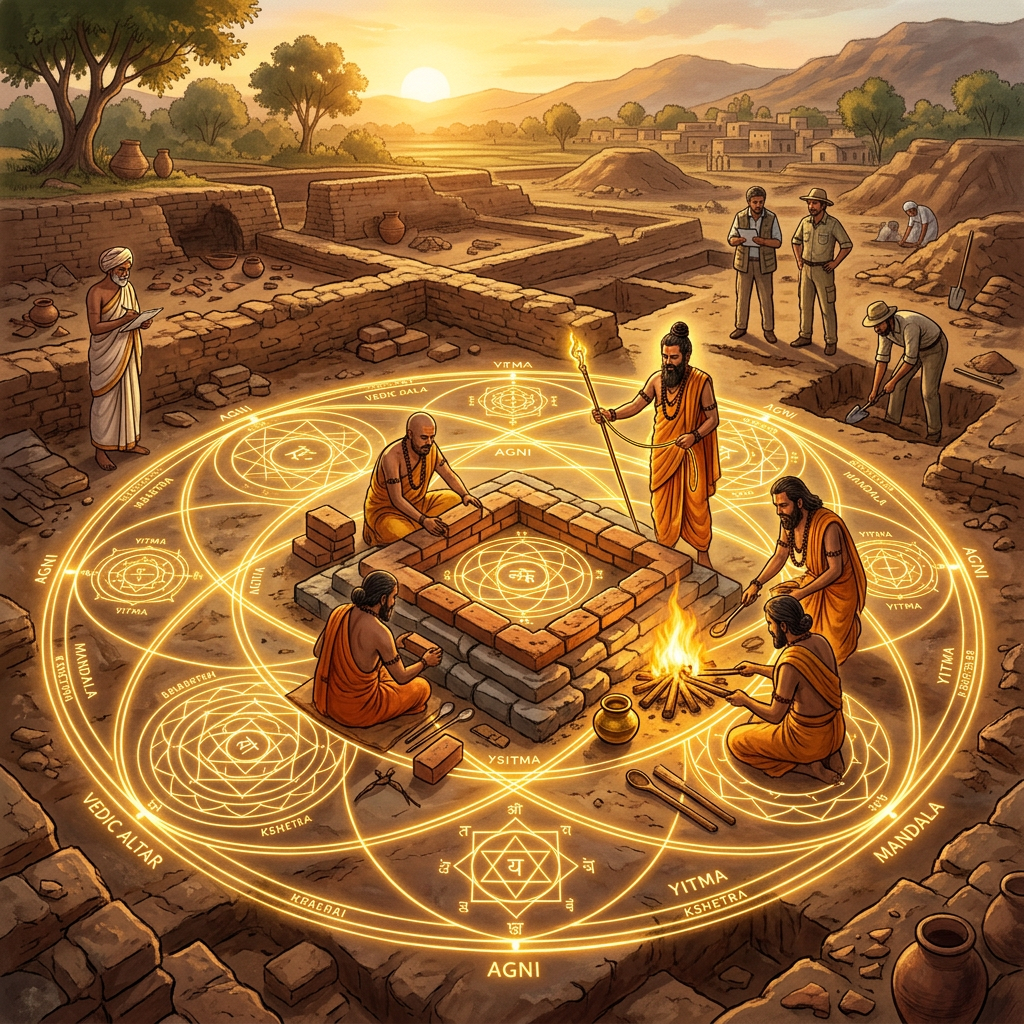
A computational study conducted by the Center for Vedic Mathematics has identified previously unrecognized algorithmic structures within the Apastamba Shulba Sutra. The research, published in Mathematical Archaeology, demonstrates that the geometric instructions for constructing specialized ritual altars utilize iterative series to approximate ellipses with a precision of 99.9%. These findings suggest that 2nd millennium BCE mathematicians had developed sophisticated numerical methods for handling non-linear curves long before the formalization of Hellenistic geometry.
The study used AI to simulate the construction steps described in the texts, revealing that the 'stretched-cord' methods were actually physical implementations of complex algebraic identities. This research provides new evidence for the transmission of high-level mathematical knowledge through oral and ritual traditions, highlighting the Shulba Sutras not just as religious manuals, but as advanced textbooks of early Indian mathematical physics.