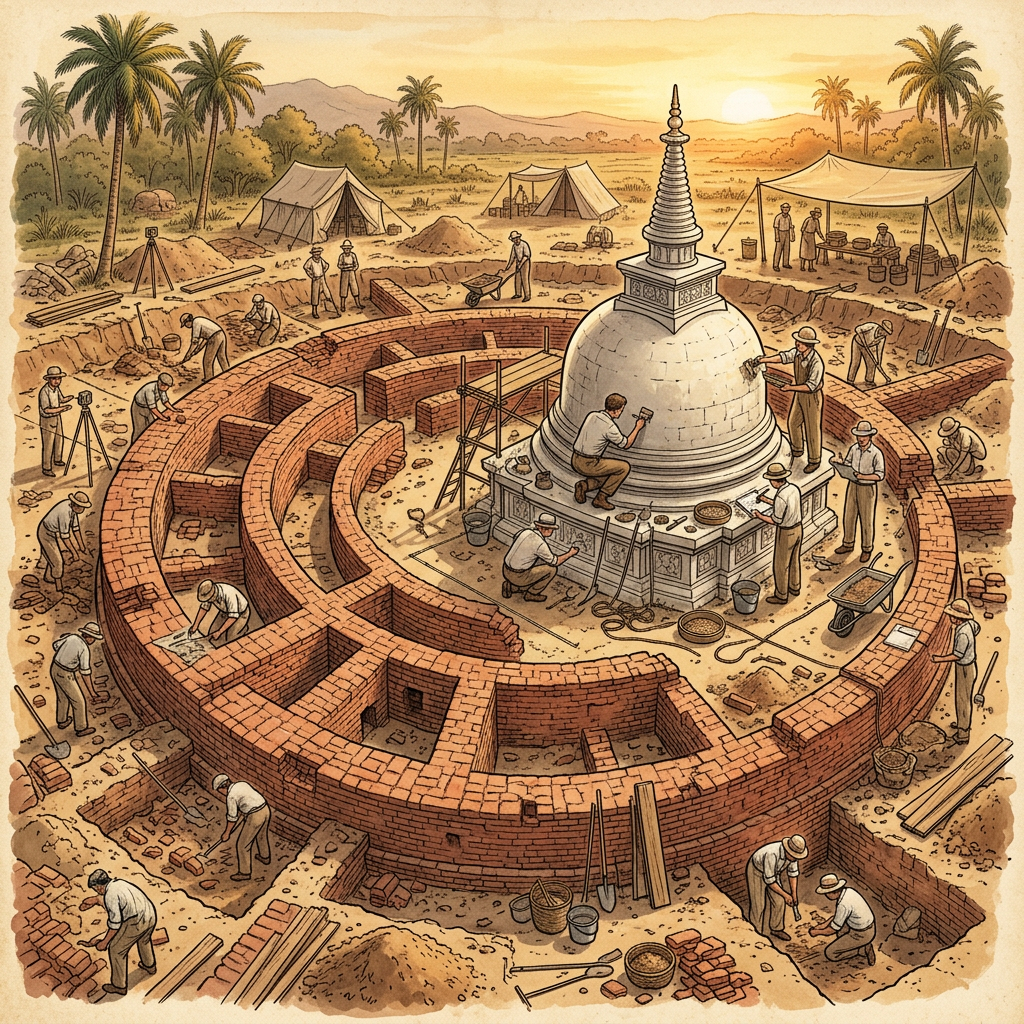
A major archaeological excavation in rural Khammam has revealed a sprawling Buddhist monastic complex dating to the 3rd century CE. Attributed to the Ikshvaku dynasty, the site includes a central 'Chaitya' hall with a pristine limestone stupa and a unique 'Vihara' (monastery) featuring residential cells for nearly fifty monks. This discovery extends the known influence of the Ikshvaku rulers further east into the Deccan plateau.
Excavators recovered several Brahmi inscriptions on the stupa railing, mentioning donations from a guild of textile merchants. The site also yielded rare fragments of Amaravati-style marble reliefs depicting scenes from the Jataka tales, confirming that the region was a vibrant center of Buddhist art and commerce during the early centuries of the Common Era.