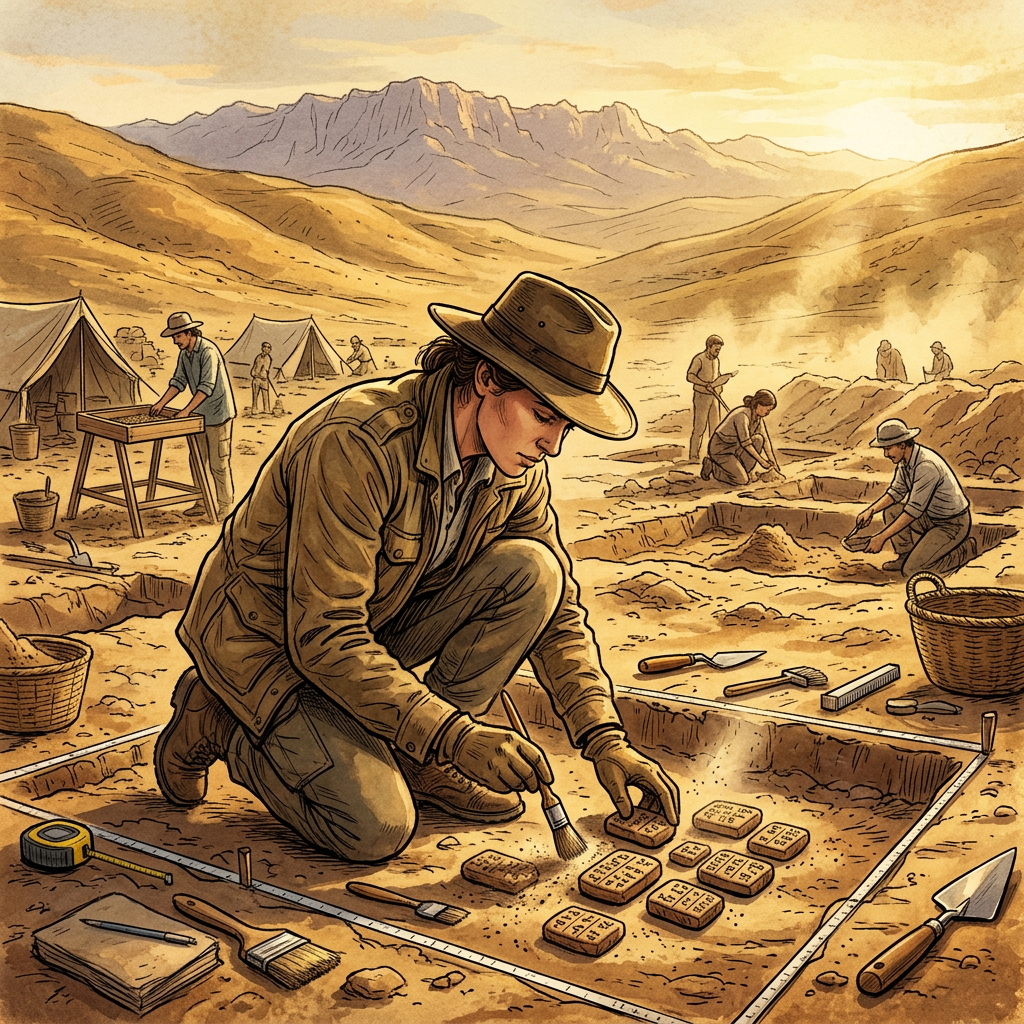
Archaeologists excavating a site in the Ghaggar-Hakra river basin have unearthed a series of clay tablets inscribed with what has been identified as the 'Dharma-Niyama', or the rules of cosmic and social order. These tablets, dating back to approximately the 4th century BCE, provide some of the earliest physical evidence of a formal ethical code rooted in the Sanatan tradition outside of oral transmission.
The inscriptions detail a list of ten universal virtues, emphasizing the 'philosophy of truthfulness' (Satya-vada) and the 'restraint of power' (Danda-niti). This find is being hailed as a major breakthrough in understanding how ancient wisdom traditions transitioned from oral narratives to structured, written ethical guidelines in the early historic period.