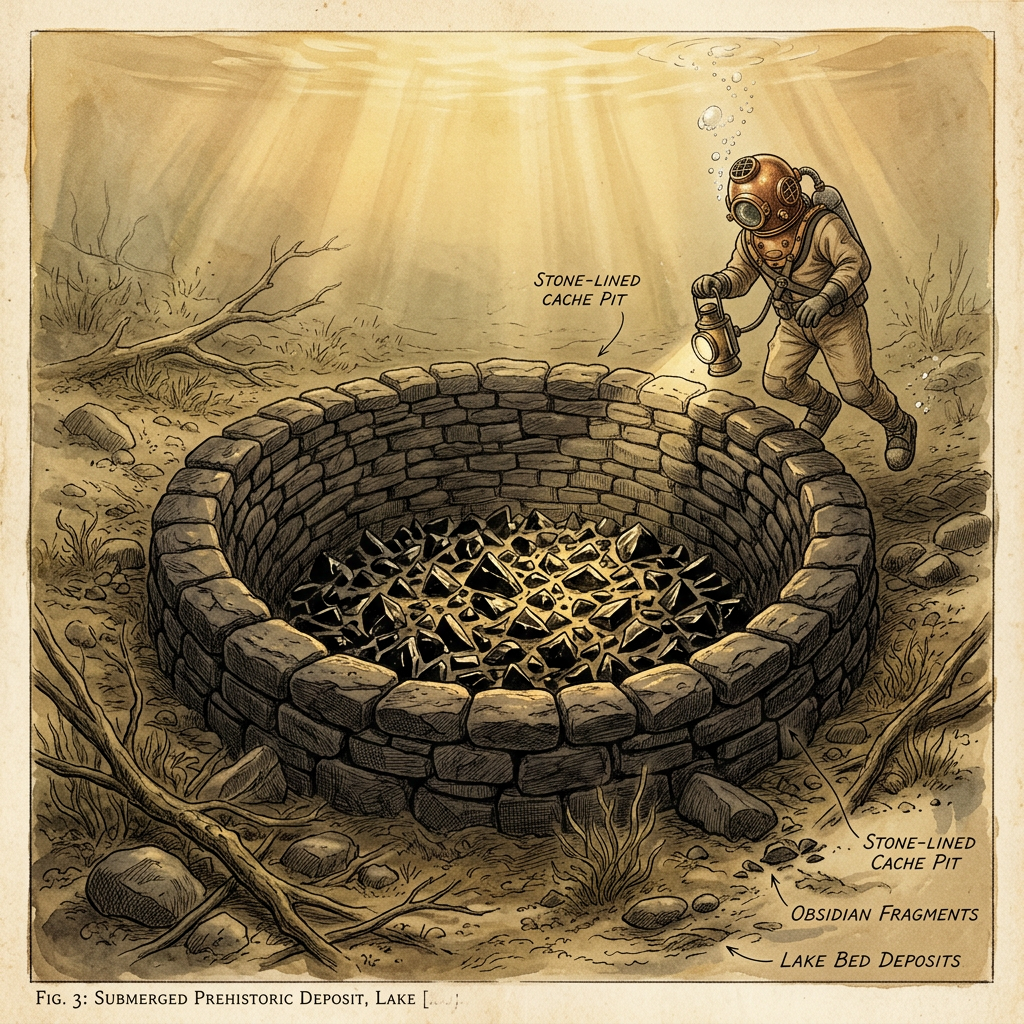
Underwater archaeologists exploring the depths of Armenia's Lake Sevan have discovered a series of prehistoric ritual pits lined with razor-sharp obsidian blades. The pits contain charred animal bones and fragments of volcanic glass, suggesting a unique ritual where fire was combined with water offerings. This site dates back to the early 2nd millennium BC and is now being linked to the origins of the "Vardavar" traditions, an ancient water-splashing festival still celebrated in Armenia today.
The discovery suggests that the festival’s modern roots lie in much older, more complex propitiation rites intended to balance the elements of fire (represented by the volcanic obsidian and char) and water. This find highlights the continuity of cultural heritage in the Armenian highlands over thousands of years.