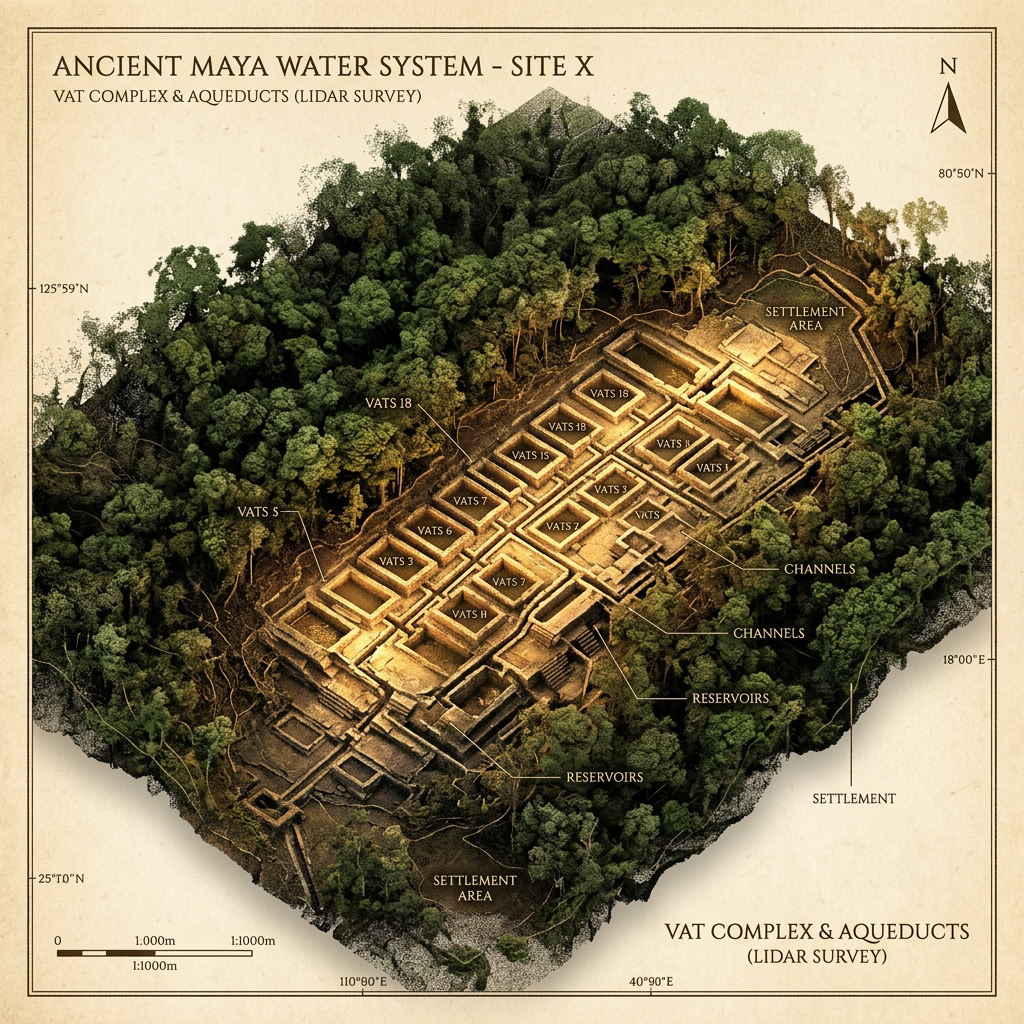
A high-resolution LiDAR survey in the remote Petén Highlands of Guatemala has identified a massive industrial complex dedicated to the large-scale production of indigo dye. The site features dozens of stone-lined soaking vats and a complex network of gravity-fed water channels. This discovery confirms that the Maya maintained a industrial-scale chemical industry to produce the pigments required for their famous wall murals and textiles.
Researchers believe this facility was a major hub for the Maya Blue pigment trade, supplying dyes to cities across Mesoamerica. The site’s location in the highlands, near a source of rare clay, suggests a highly strategic placement for the chemical refinement process. The LiDAR data also revealed worker housing and defensive watchtowers, indicating the economic importance and protected status of the dye-making monopoly.