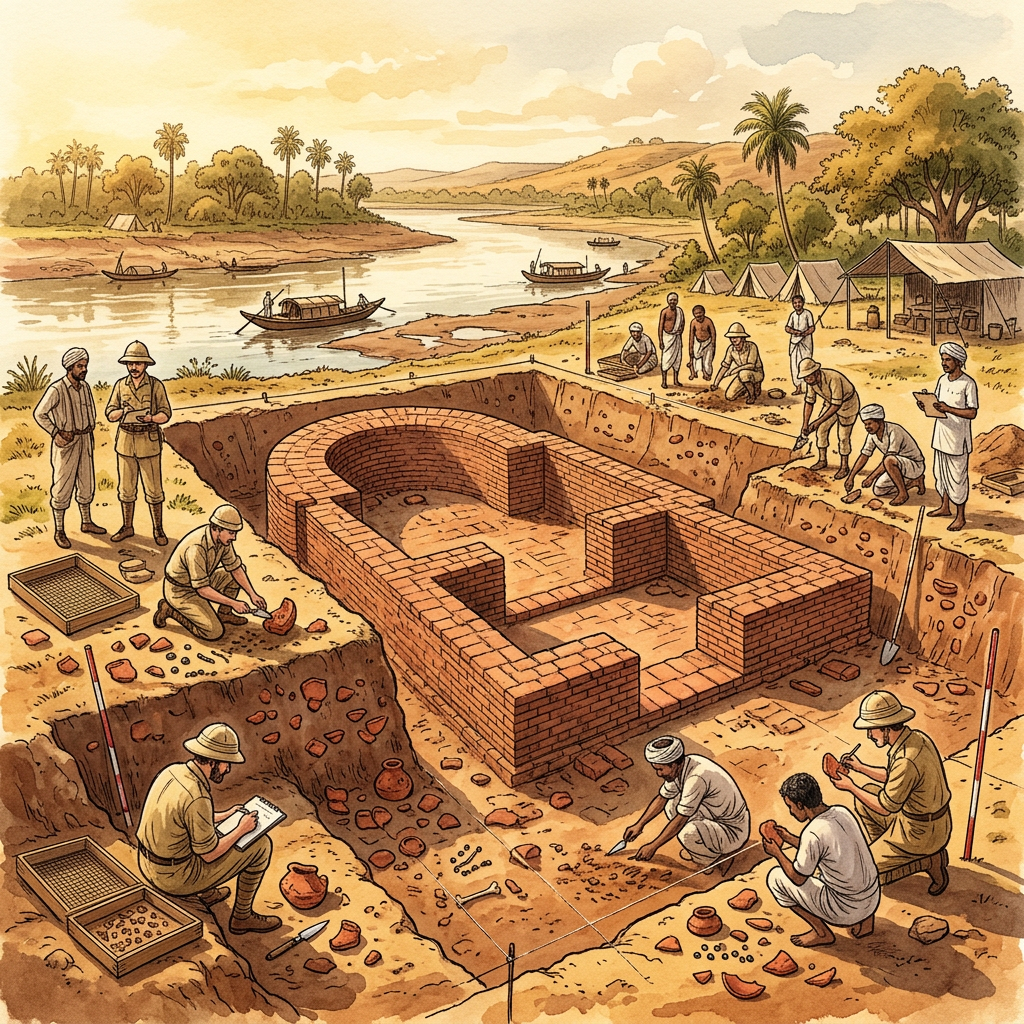
Archaeologists working along the banks of the Krishna River in Guntur have discovered the foundations of a 3rd-century CE brick temple. Preliminary analysis identifies the site as a shrine dedicated to Skanda-Kartikeya, a prominent deity during the Satavahana and early Ikshvaku periods. The temple layout consists of an apsidal sanctum, a rare architectural feature for this era, and is accompanied by several terracotta figurines depicting the deity with his spear.
The discovery is vital for tracing the transition from Buddhist chaityas to structural Hindu temples in South India. The use of large-format kiln-fired bricks and lime mortar suggests a sophisticated level of early masonry. The site also yielded several Satavahana coins, which have helped pinpoint the construction period to the reign of the final rulers of the dynasty, providing a clearer timeline for the regional evolution of sacred architecture.