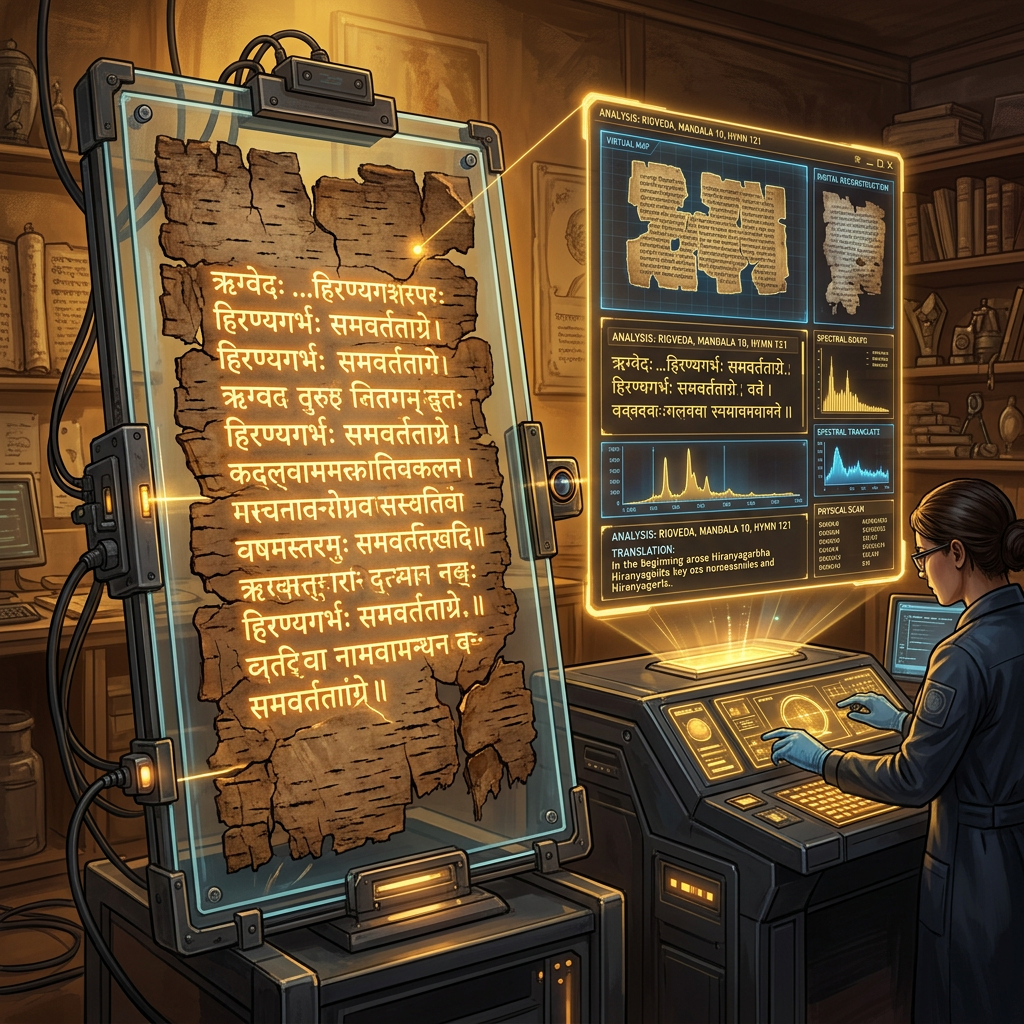
Scholars at the Oxford Centre for Hindu Studies have announced the successful decipherment of a collection of 8th-century birch-bark fragments found in the high-altitude caves of the Karakoram. Using a novel neural-decipherment algorithm, the team reconstructed a lost treatise belonging to the Vaisheshika school of philosophy, which provides a detailed theoretical framework for what modern science calls 'molecular adhesion' and 'surface tension'.
The text, attributed to a later commentator on Kanada’s atomic theories, describes the 'Guna' (qualities) of liquids in terms of internal cohesive forces. This discovery indicates that ancient Indian physicists had developed a systematic nomenclature for intermolecular forces, applying these concepts to explain the capillary action observed in plant stems and the behavior of mercury in alchemical vessels.