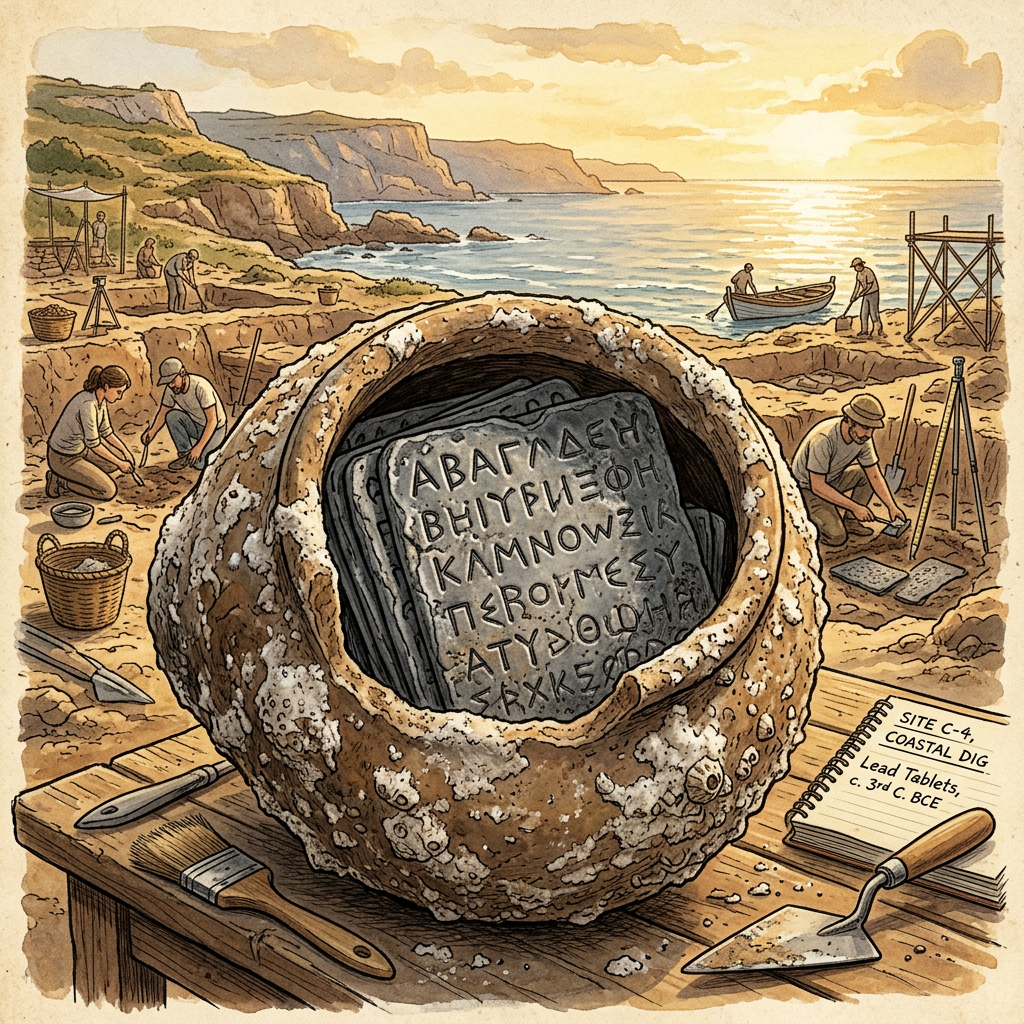
Excavations near the ancient port of Muziris have brought to light a series of lead tablets dating to the 3rd century BCE. The inscriptions, written in early Brahmi, are part of a lost compendium known as the Dharma-Kosa. The text provides a philosophical justification for the equitable distribution of wealth, arguing that private ownership is a secondary right compared to the collective survival of the community.
The Dharma-Kosa tablets are unique because they merge early Upanishadic concepts of the 'Universal Self' with practical economic instructions. They outline a system where trade is viewed as a form of social sacrifice (Yajna), and hoarding is characterized as a disruption of the cosmic balance. This discovery highlights the sophisticated 'Social Dharma' that guided the maritime trade networks of the Mauryan era.