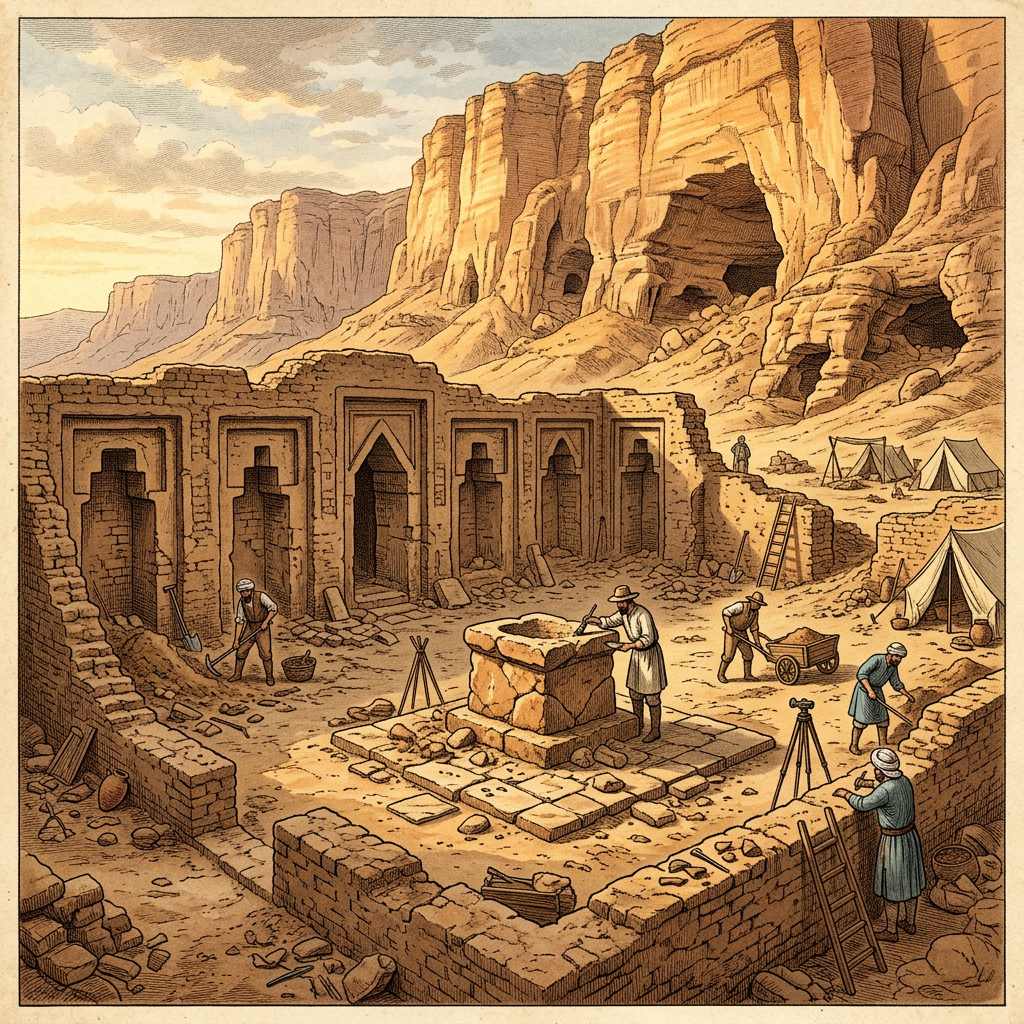
Archaeologists in the Bandiagara Escarpment region of Mali have uncovered the foundations of a massive mud-brick ceremonial courtyard dating back to the 11th century. The site displays a layout that closely mirrors the gathering spaces used in the modern-day Dama mask festivals, where the Dogon people celebrate the transition of spirits from the world of the living to the ancestors. This discovery suggests a remarkable millennium of cultural continuity in West African ritual architecture.
The courtyard features specialized niches for the storage of ceremonial masks and a central stone altar stained with traces of millet beer and animal fat, indicative of ancient feasting. The presence of these structural features confirms that the complex social and spiritual hierarchies represented in current Dogon festivals were already well-established during the Medieval period. Researchers hope this site will provide more clues into the early migration patterns and spiritual development of the peoples of the Niger River basin.