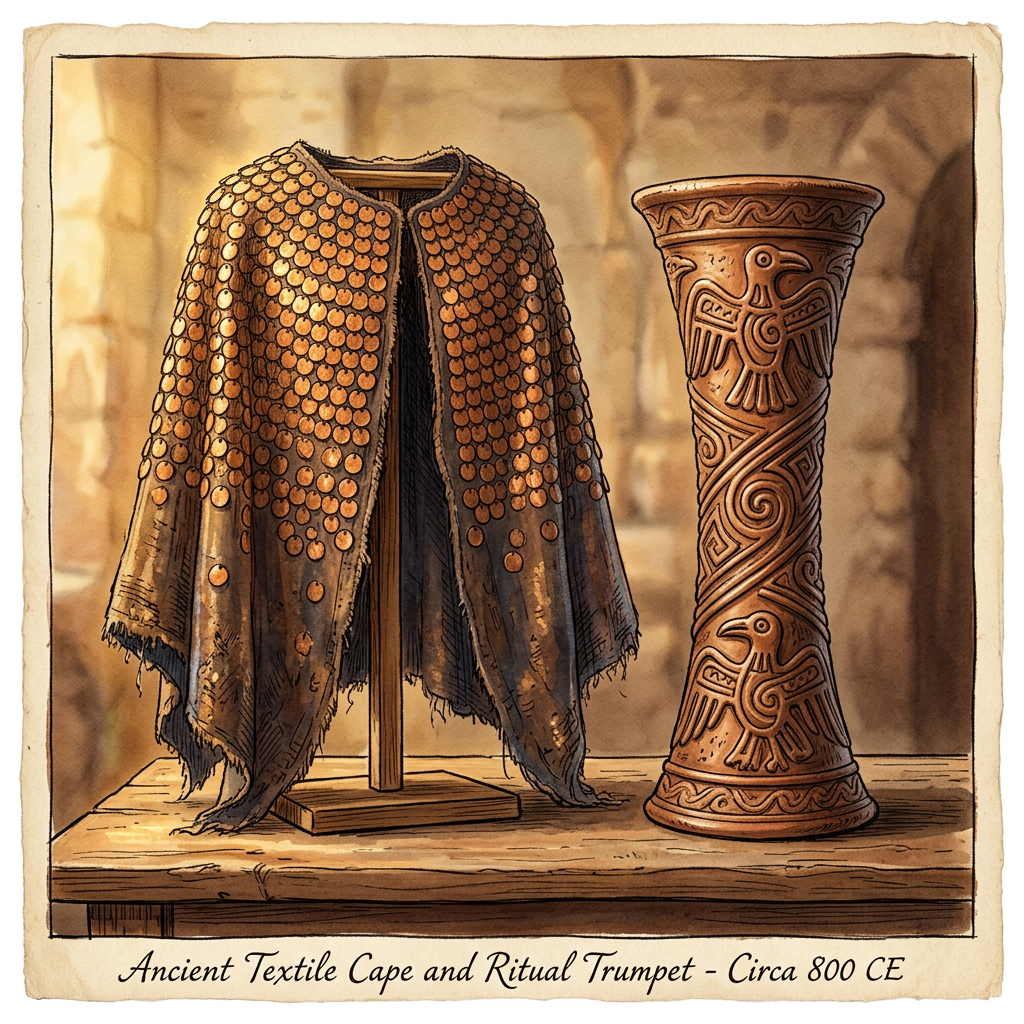
Excavations in a high-altitude grotto in the Catamarca Province of Argentina have yielded incredibly well-preserved 'copper-spangled' capes belonging to the La Aguada culture, dating to roughly 600–900 CE. These garments, adorned with hundreds of tiny, polished copper discs, were used in performance-based rites known as the Festival of the Sun-Bird. The discs were designed to catch the first rays of the morning sun, creating a blinding, shimmering effect that simulated the plumage of a celestial falcon.
Alongside the textiles, researchers found ceramic trumpets decorated with feline and avian motifs, suggesting that the festival involved complex musical and visual choreography. This discovery is significant as it provides the first tangible evidence of the shamanic performance traditions that predate the Inca influence in the Southern Andes. The ritual is thought to have celebrated the transition between the dry and wet seasons, utilizing the reflective power of metal to 'call' the rains through solar sympathetic magic.