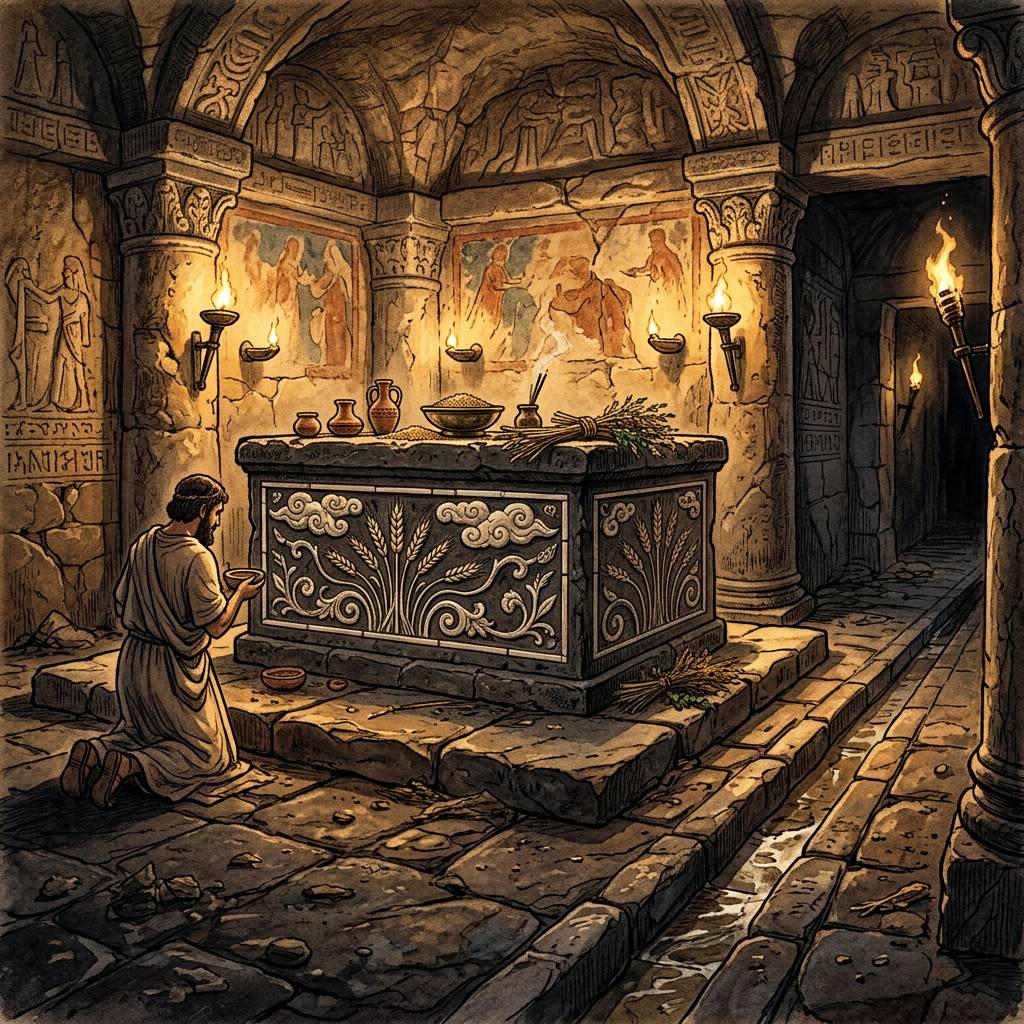
Excavations at the Royal Palace of Ugarit in modern-day Syria have revealed a hidden chamber containing four 'ivory-inlaid' libation altars dating to the Late Bronze Age (c. 1300 BCE). These altars were specifically dedicated to the Festival of the First Rain, a critical event in the Canaanite calendar aimed at petitioning the god Baal to end the long summer drought. The ivory carvings depict stylized rain clouds and ears of grain, emphasizing the agricultural importance of the rite.
The floor of the chamber was constructed with a sophisticated drainage system, allowing for the massive pouring of wine, oil, and water without flooding the room. This architectural detail indicates that the 'libation' part of the festival was a spectacle of abundance, meant to mimic the coming rainfall. The discovery offers a new look at the high-status logistics of ancient Levantine religious festivals and their role in reinforcing the king's role as the intermediary between the gods and the weather.