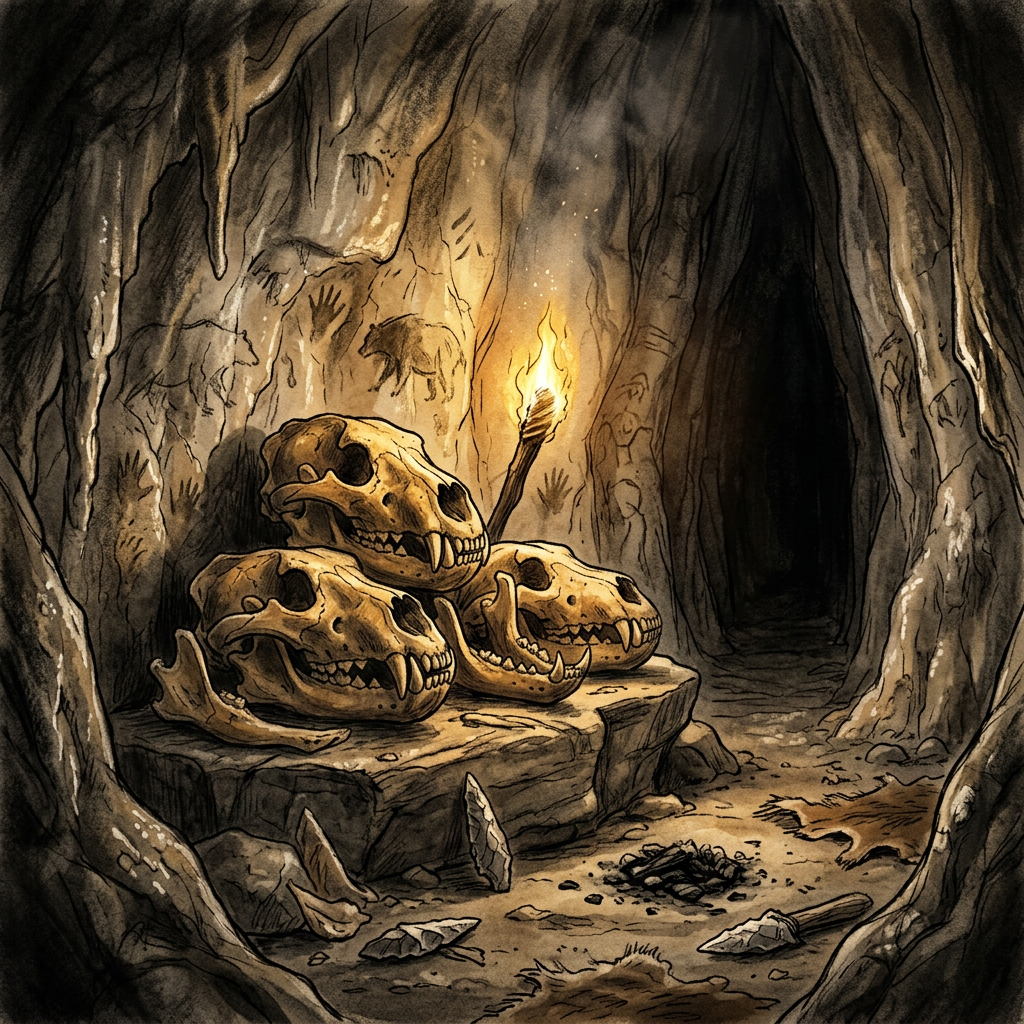
A team of speleologists and archaeologists in the Jura Mountains has uncovered a remote limestone cavern containing a 12,000-year-old hunting shrine. The site features a central altar constructed from the stacked skulls of extinct cave bears, surrounded by carefully arranged flint tools and ochre-stained pebbles. This find represents one of the most complex ritual sites from the transition between the Paleolithic and Mesolithic periods in Europe.
Of particular interest are the abstract engravings found on the cave walls, which appear to map the migratory patterns of local megafauna. Stable isotope analysis of the remains suggests the shrine was used seasonally for over five centuries, serving as a focal point for dispersed hunter-gatherer groups. The discovery provides profound insights into the spiritual lives and environmental knowledge of early humans during a period of rapid climatic shift.