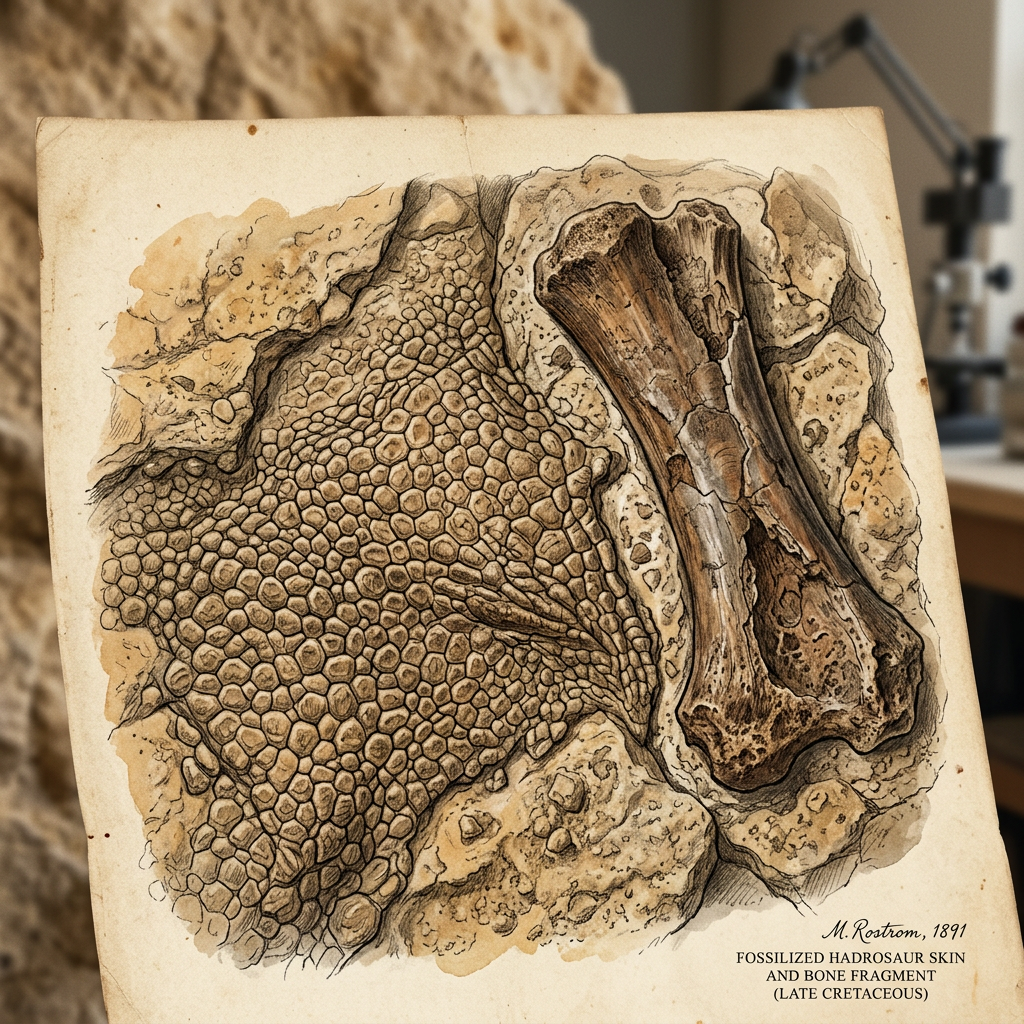
In a groundbreaking discovery in the Narmada Valley, researchers have unearthed the fossilized remains of a 90-million-year-old Titanosaur that features exceptionally rare soft-tissue impressions. While dinosaur bones are common in the region, the preservation of skin texture—showing a pattern of hexagonal scales and osteoderms—is a first for the Indian subcontinent. The find provides critical data on the external anatomy of these long-necked giants.
The specimen was found embedded in a fine-grained volcanic ash layer, which facilitated the rapid mineralization of the skin. Microscopic analysis of the impressions has revealed evidence of specialized heat-regulating structures, suggesting that these dinosaurs had evolved unique biological adaptations to the tropical climate of Cretaceous India. This fossil is expected to redefine our understanding of sauropod evolution on the Gondwanan landmass.