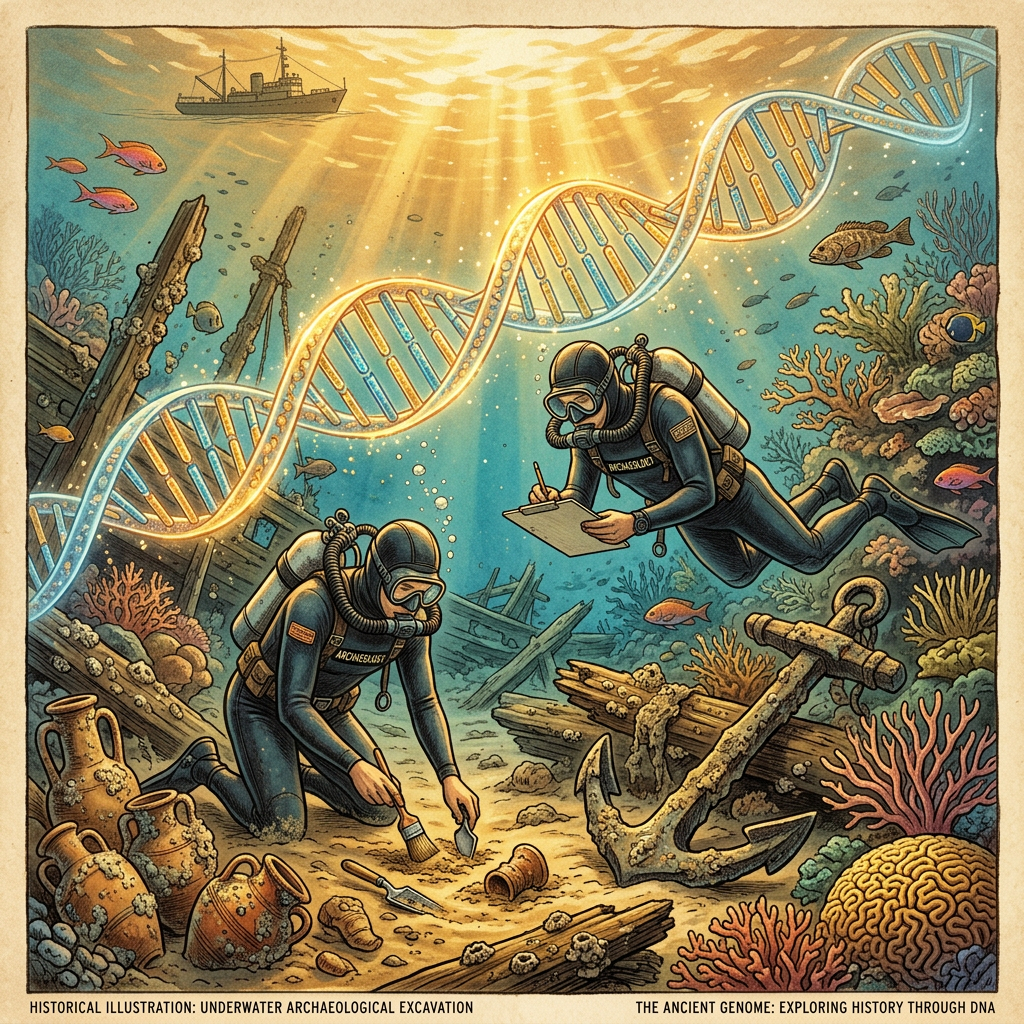
New paleogenomic research in Paleogenomics Today has analyzed the remains of individuals found in submerged caves off the coast of Southeast Asia, dating to 10,000 BCE. The study identified a previously unknown 'ghost lineage' of Pleistocene humans who possessed genetic markers specialized for deep-sea diving and high-salinity diets, suggesting a highly specialized maritime culture existed before the rising sea levels at the end of the last Ice Age.
This genetic signature suggests that these 'Sundaland' voyagers maintained extensive trade networks across the Indian Ocean, potentially reaching the eastern coast of India much earlier than hypothesized. The findings rewrite the early history of maritime expansion, suggesting that human adaptation to sea-based ecosystems was a primary driver of migration in the early Holocene.