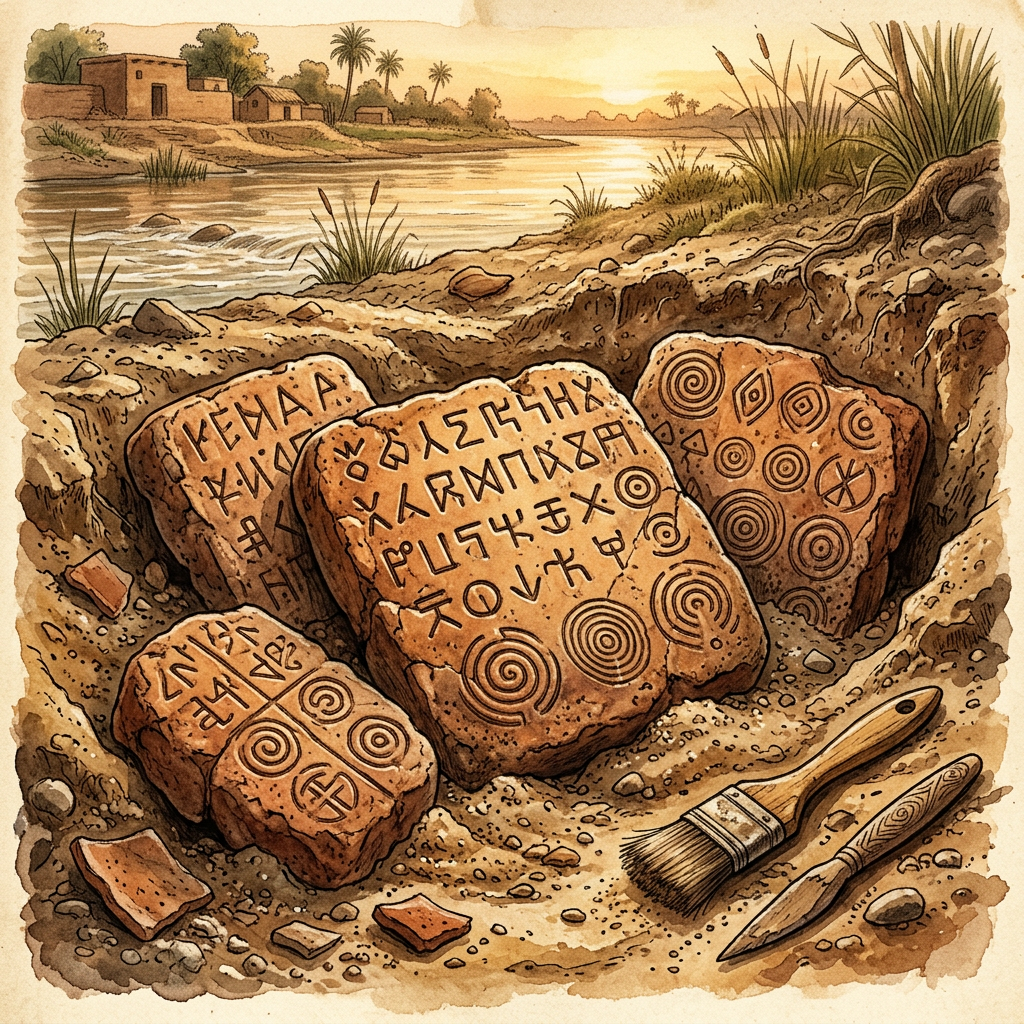
Excavations in the Ghaggar-Hakra basin have yielded a cache of inscribed clay tablets dating to the 5th century BCE. The inscriptions, titled 'Abhaya-Dharma', present a radical early philosophy regarding the ethics of fearlessness. The text posits that social equilibrium can only be achieved when a society collectively abandons the 'economy of fear,' replacing it with a system based on Abhaya (security/fearlessness) for all beings.
This discovery provides rare archaeological evidence of non-monarchical political philosophy in ancient India. The tablets argue that the true measure of a civilization's advancement is the degree to which its most vulnerable members are free from state-sponsored and social intimidation. Scholars are now comparing these findings to the contemporary developments in Pre-Socratic Greek thought.