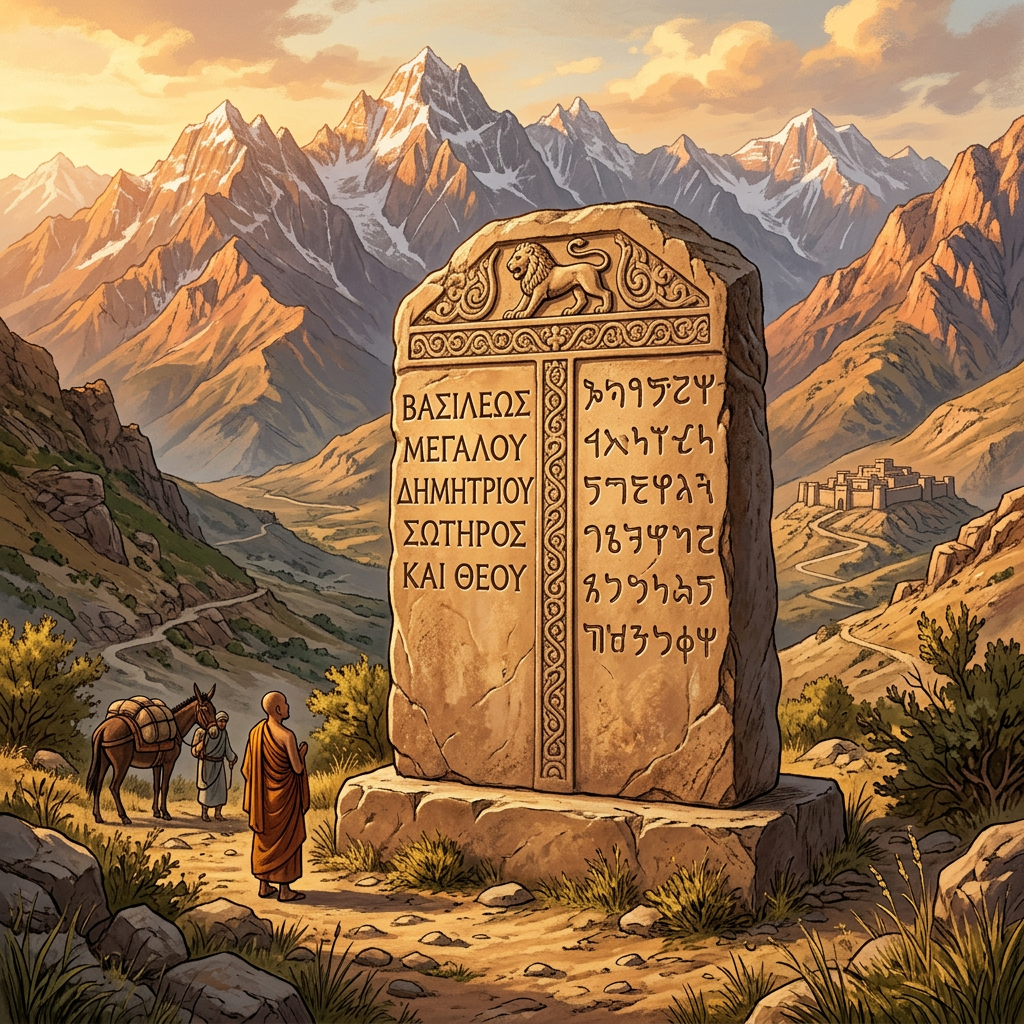
A breakthrough in the Kabul Valley has led to the decipherment of a series of stone inscriptions that scholars are calling the 'Sophos-Dharma' tablets. These 2nd-century BCE artifacts represent a unique philosophical synthesis between Greek Stoicism and Vedic Dharma. The text outlines a hybrid virtue ethics system where the Greek concept of Logos is equated with the Vedic concept of Rta (cosmic order).
The bilingual inscriptions, written in Greek and Kharosthi, argue for a life of 'disciplined equilibrium,' merging the Stoic emphasis on internal fortitude with the Vedic pursuit of spiritual liberation. Researchers believe these tablets were part of a public philosophical square, intended to harmonize the diverse intellectual traditions of the Indo-Greek kingdoms during the reign of Menander I.