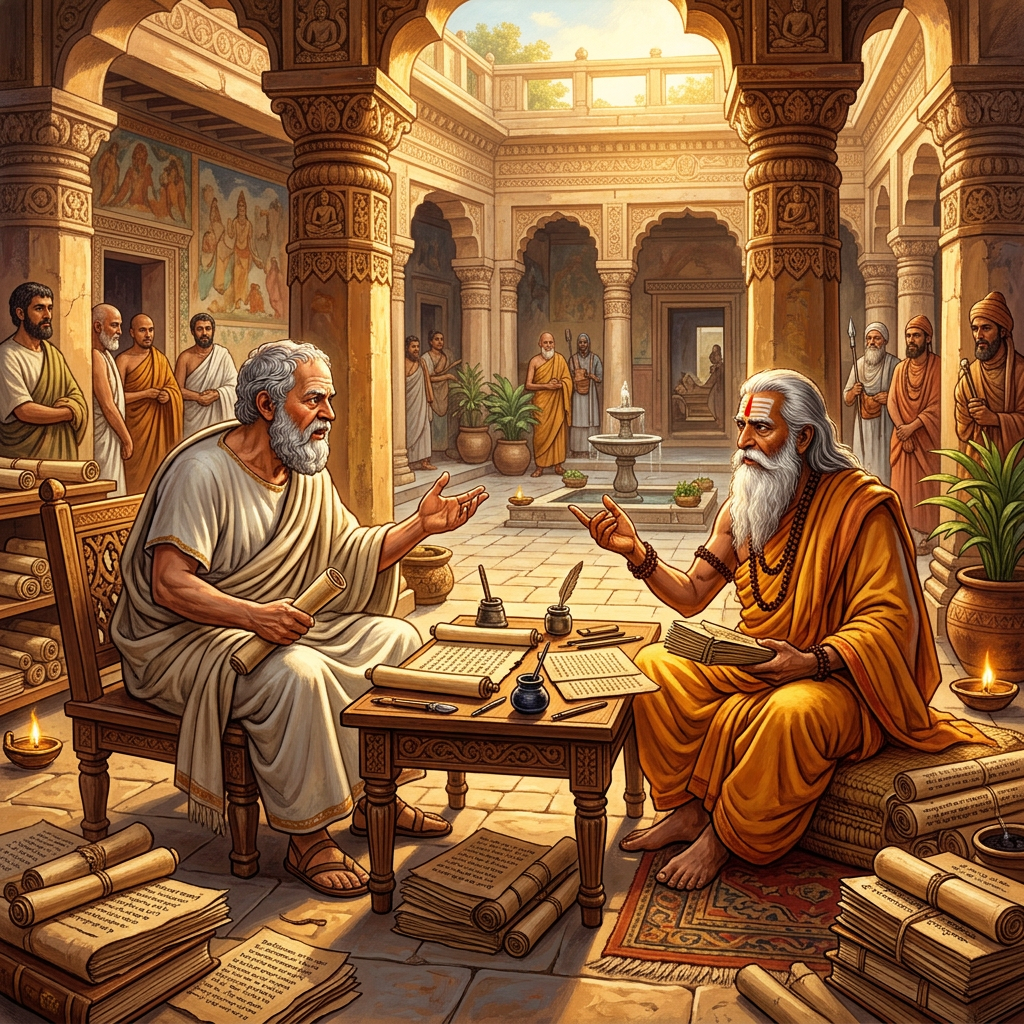
A multinational team of linguists has published a comprehensive analysis of inscriptions found in modern-day Afghanistan, dating to the Kushan period. The study identifies a fascinating philosophical synthesis between Indo-Aryan Vedic concepts and Greek Aristotelian ethics, specifically regarding the 'Golden Mean' and the Vedic Madhyama-Marga (Middle Path).
The researchers argue that the silk road was not just a conduit for goods, but a vibrant arena for epistemological exchange. The Bactrian inscriptions suggest that sages from both traditions collaborated to define a 'universal virtue' that transcends cultural boundaries, focusing on the rectification of the mind as the foundation for global peace.