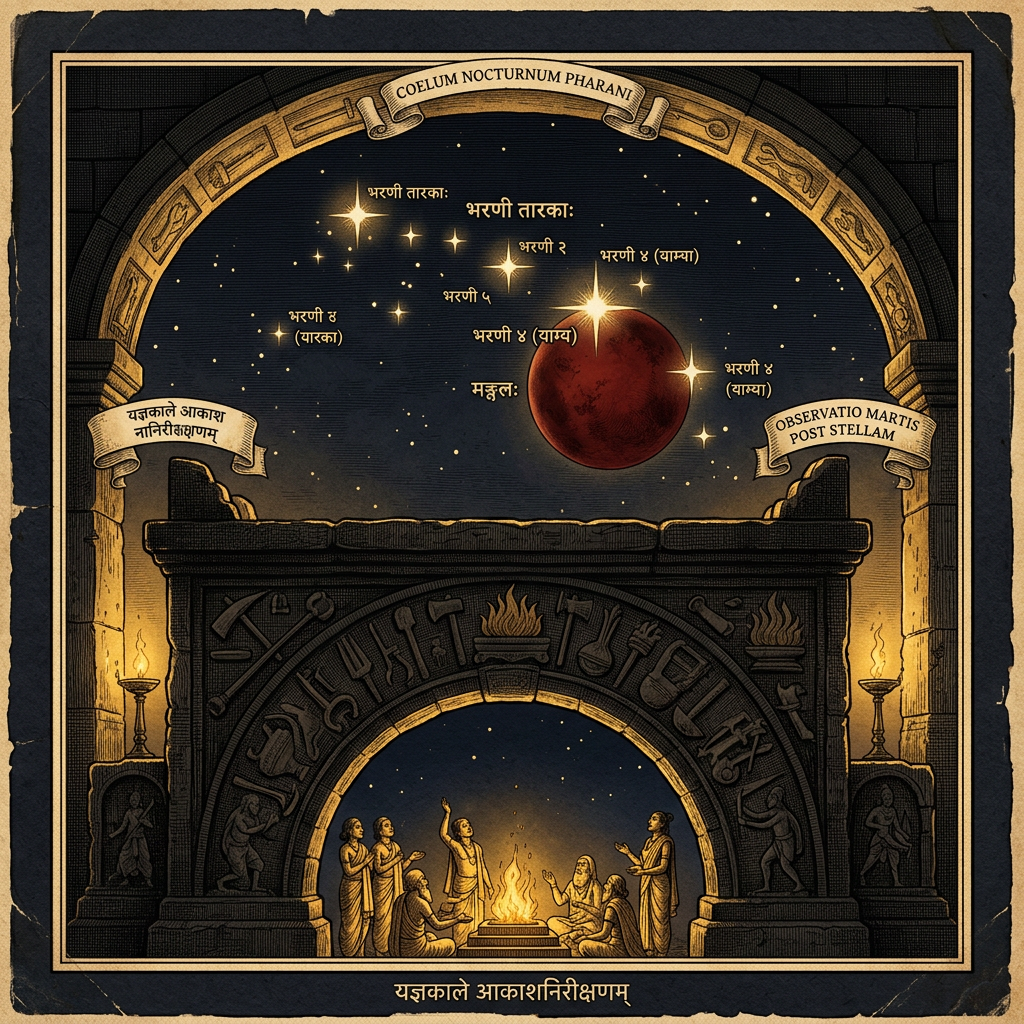
A computational study published in the Archaeoastronomy & Vedic Science Review has validated the precision of astronomical descriptions found in 2nd millennium BCE Rigvedic texts. By using high-resolution celestial simulations, researchers demonstrated that specific ritual hymns precisely describe a rare sequence of planetary occultations within the constellation of Bharani that occurred around 1900 BCE.
The research emphasizes the use of iterative observation techniques by ancient Vedic astronomers to track the movement of Mars and Jupiter against fixed stellar backdrops. This study provides compelling evidence for a long-standing tradition of systematic sky-watching that predates the formalization of the later Siddhantic astronomical systems.