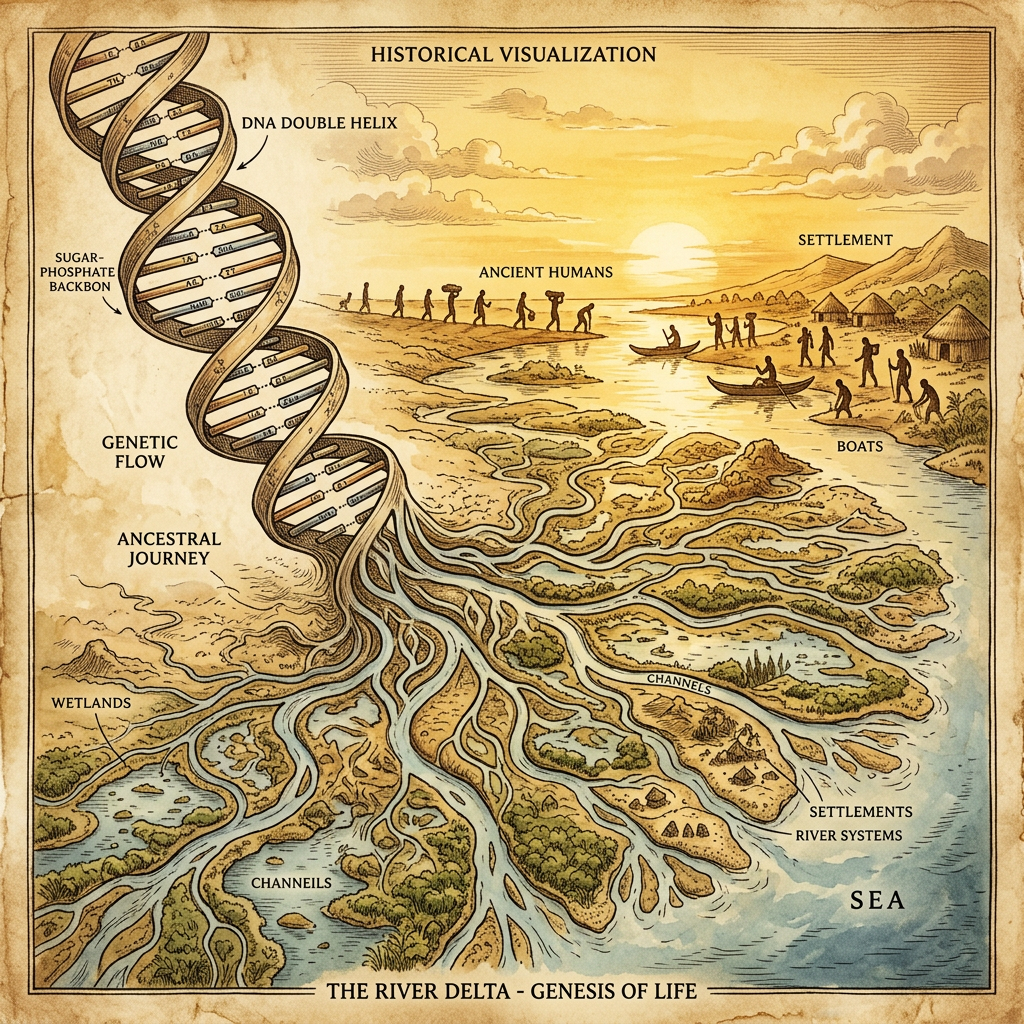
A new large-scale genomic study published in Paleogenomics Quarterly has analyzed 9,000-year-old skeletal remains from the Brahmaputra Basin. The research identifies the earliest known genetic signature of adaptation to seasonal riverine environments, specifically highlighting genes linked to enhanced recovery from waterborne parasitic infections and efficiency in high-humidity metabolism.
This genetic discovery provides a critical link between the Holocene climate transition and the movement of early populations along the major river systems of South Asia. The data suggests that these ancient foragers possessed a unique 'ghost lineage' that likely contributed significantly to the ancestry of later Neolithic farming communities in the region.