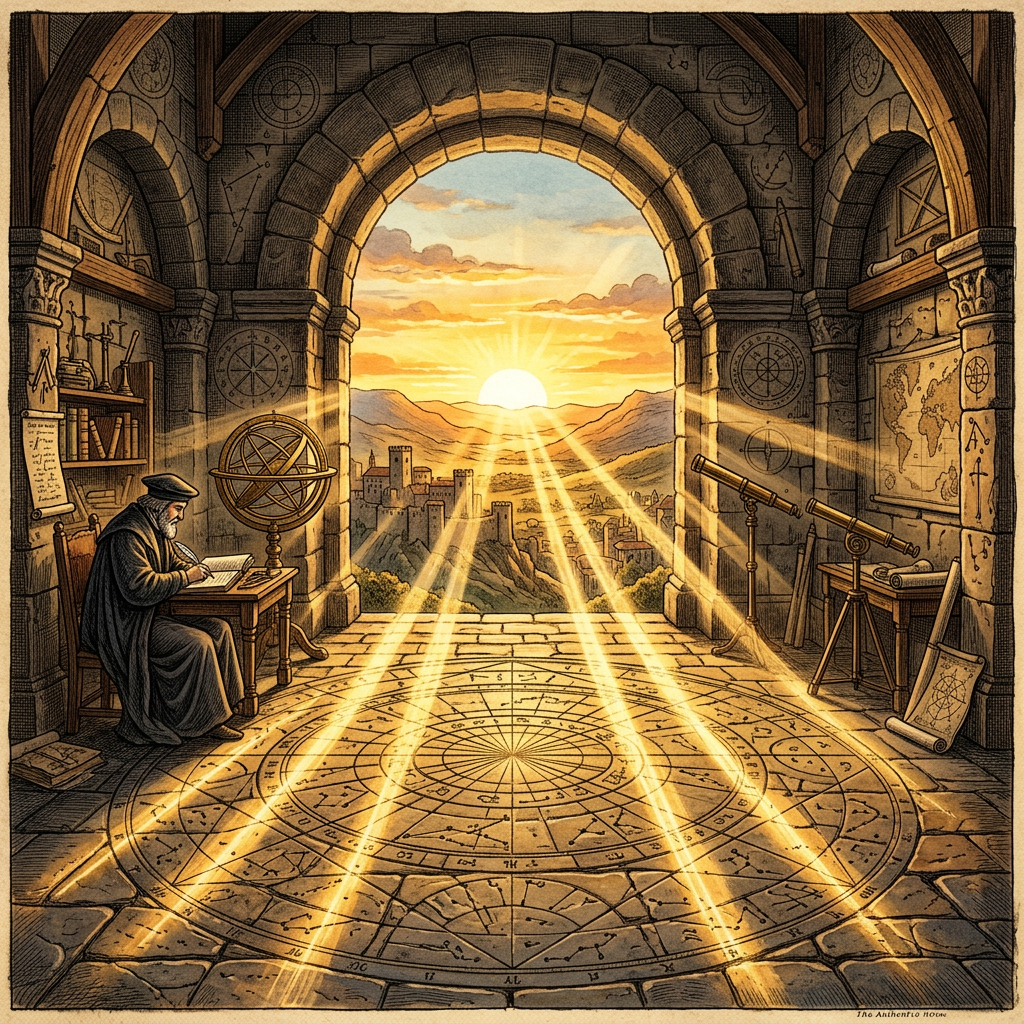
Research conducted on 11th-century Siddhanta-Manjari manuscripts has uncovered a series of sophisticated Sanskrit algorithms used to model the atmospheric scattering of solar light. The study, published in the International Journal for the History of Science, shows that medieval Indian astronomers calculated the varying intensity of dawn and twilight based on the angle of solar incidence and particulate density.
These mathematical methods predated similar European investigations into the physics of light by several centuries. The findings suggest that the Sanskrit tradition maintained a deep interest in the optical properties of the atmosphere, integrating these observations into their broader predictive models for the visibility of lunar and planetary bodies.