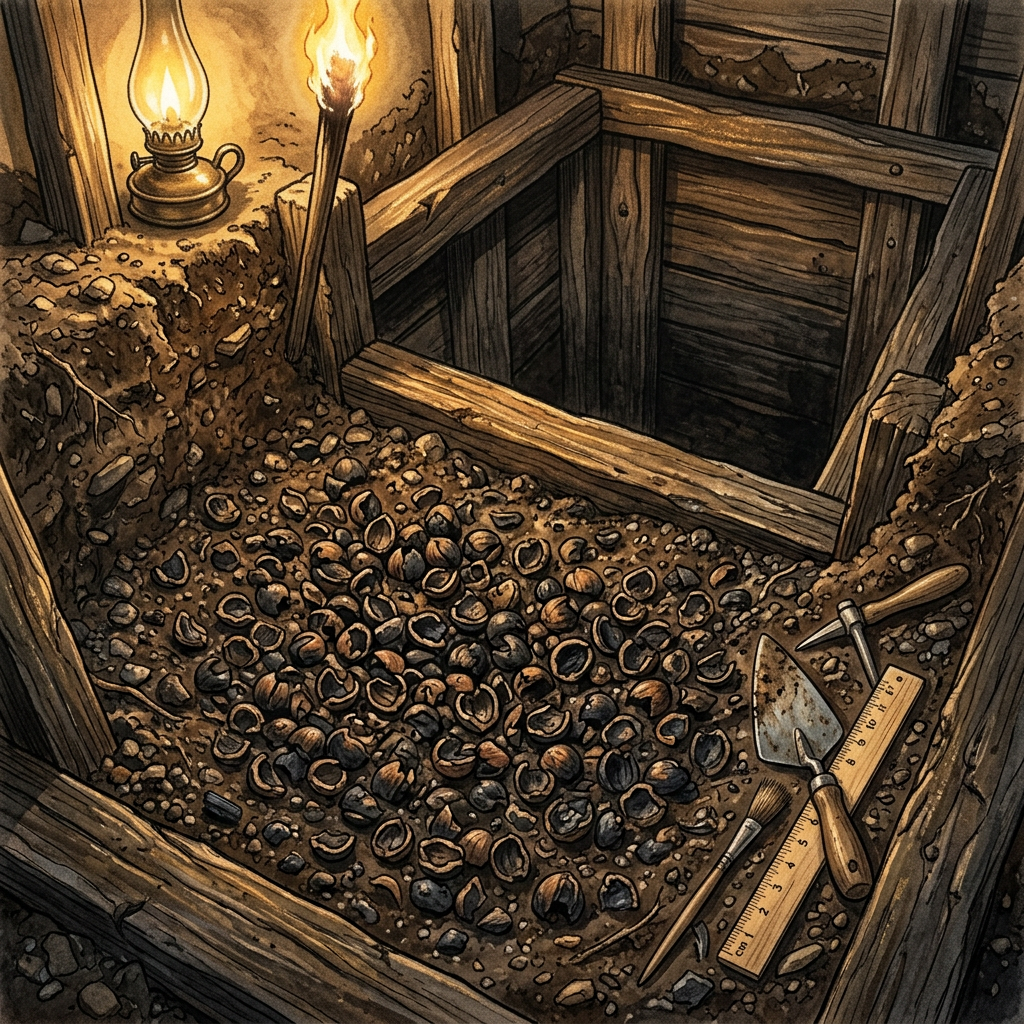
Archaeologists working near the Hill of Tara have identified a series of timber-lined pits containing high concentrations of charred hazelnut shells and fermented grain residues. Chemical signatures suggest the production of a specialized ritual ale used during the transition from summer to autumn. This find provides a tangible link to the prehistoric roots of later Gaelic harvest festivals, emphasizing the sacred role of the hazel tree in early Irish mythology.
The site layout includes a central ceremonial hearth surrounded by dozens of these 'brewing pits,' suggesting a coordinated communal effort to prepare for seasonal festivities. This discovery pushes back the evidence for organized, large-scale harvest celebrations in Ireland by several centuries, showcasing the social complexity of Late Bronze Age communities.