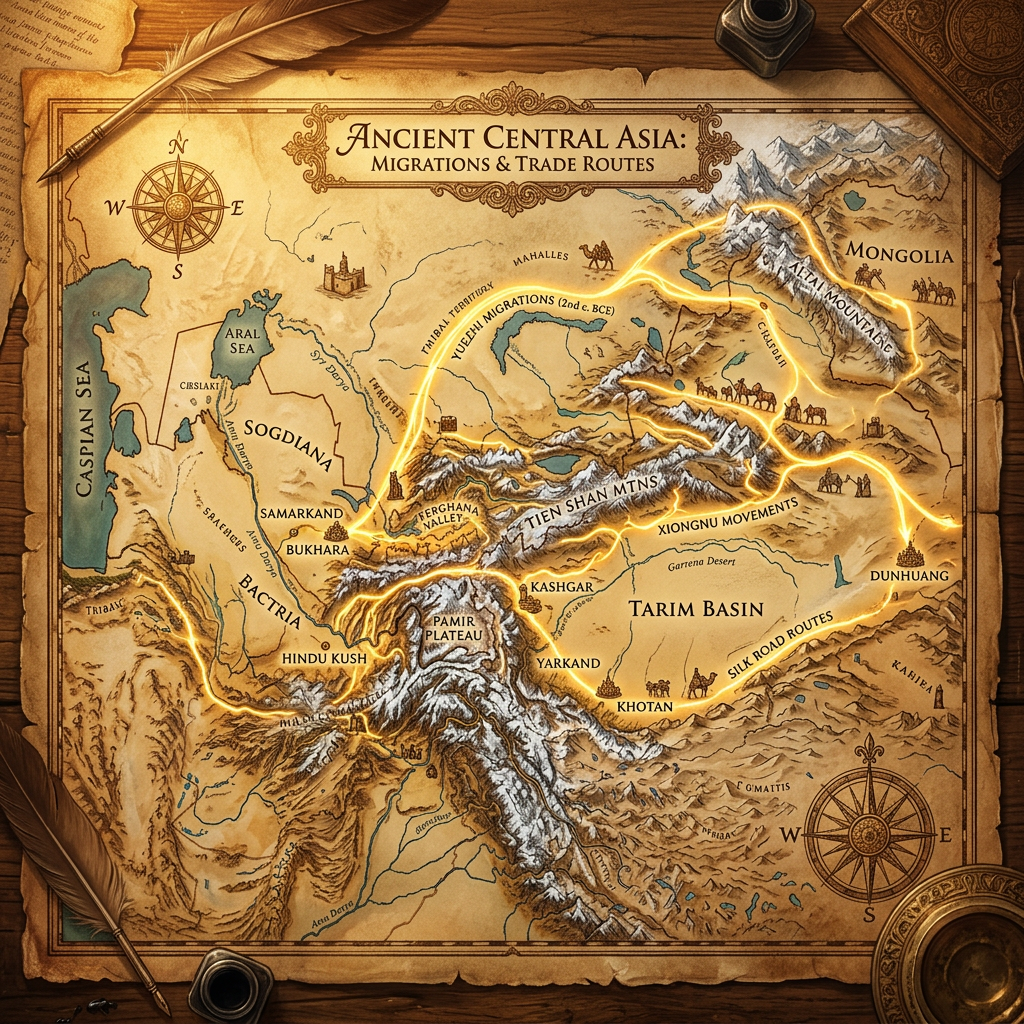
A major genomic study published in Nature Genetics has revealed a previously unknown migration pulse into the Tarim Basin during the early Holocene. By sequencing the DNA of 12,000-year-old remains found in the Tien Shan mountain range, scientists identified a unique 'ghost lineage' that diverges from both Western Steppe Herders and Ancestral North Indians. This population appears to have been highly adapted to the high-altitude, arid environments of Central Asia.
The research suggests that these ancient foragers were the first to establish seasonal transhumance routes that would later facilitate the development of the Silk Road. The genetic markers found in these remains also provide new insights into the spread of early linguistic families across the Eurasian continent, challenging existing models of cultural dispersal in the region.