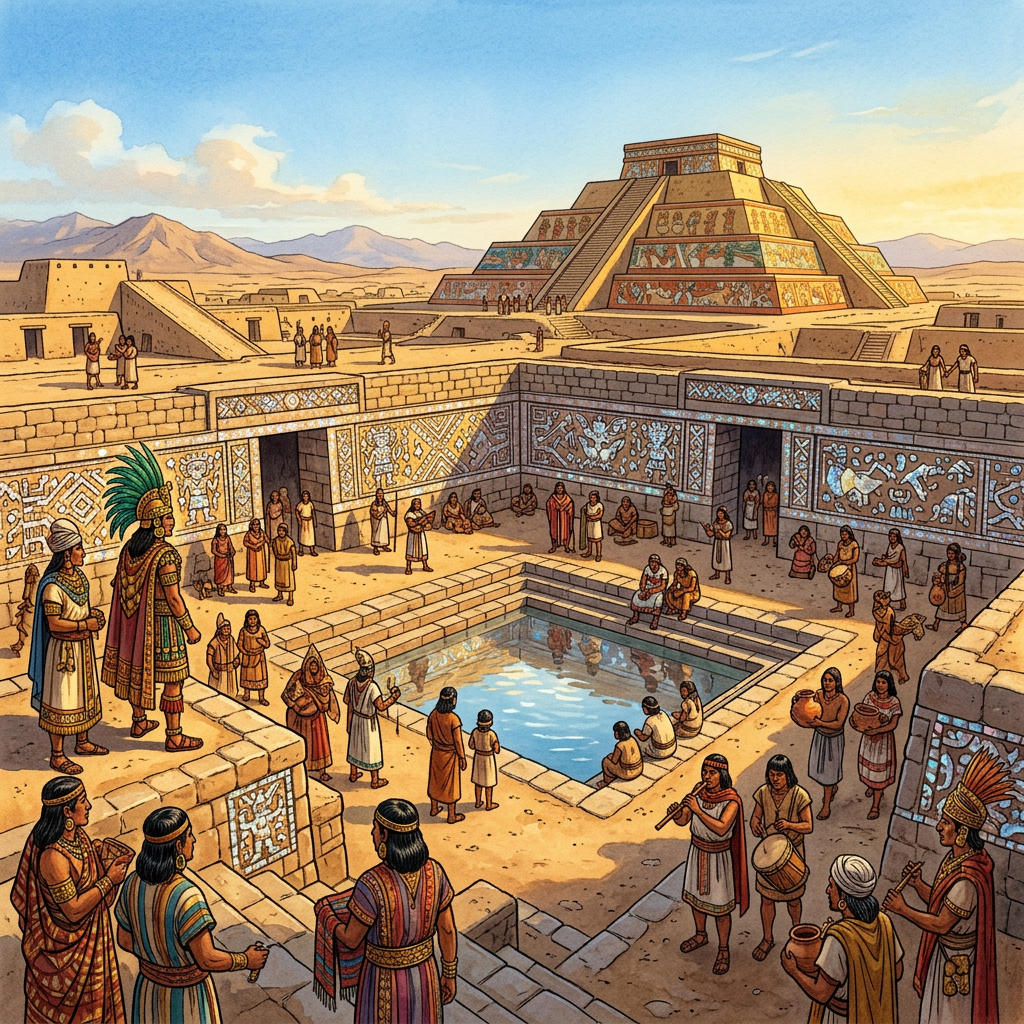
Archaeologists at the Huaca de la Luna complex in northern Peru have identified a 1,200-year-old aquatic performance plaza used by the Moche Culture. The site features a large, stone-lined basin surrounded by elevated platforms and shell-inlaid acoustic chambers. Researchers suggest this plaza was used for ritualistic performances involving water, where the sound of crashing waves or flowing water was amplified by the unique architectural design to create an immersive spiritual experience.
Excavations revealed dozens of Spondylus shell trumpets and ceramic drums buried beneath the plaza floor, likely as offerings to the sea deity. The acoustic chambers were found to have walls lined with polished abalone shells, designed to resonate when specific frequencies were played. This discovery highlights the Moche people's advanced understanding of acoustics and their ability to integrate natural elements into monumental ceremonial architecture.