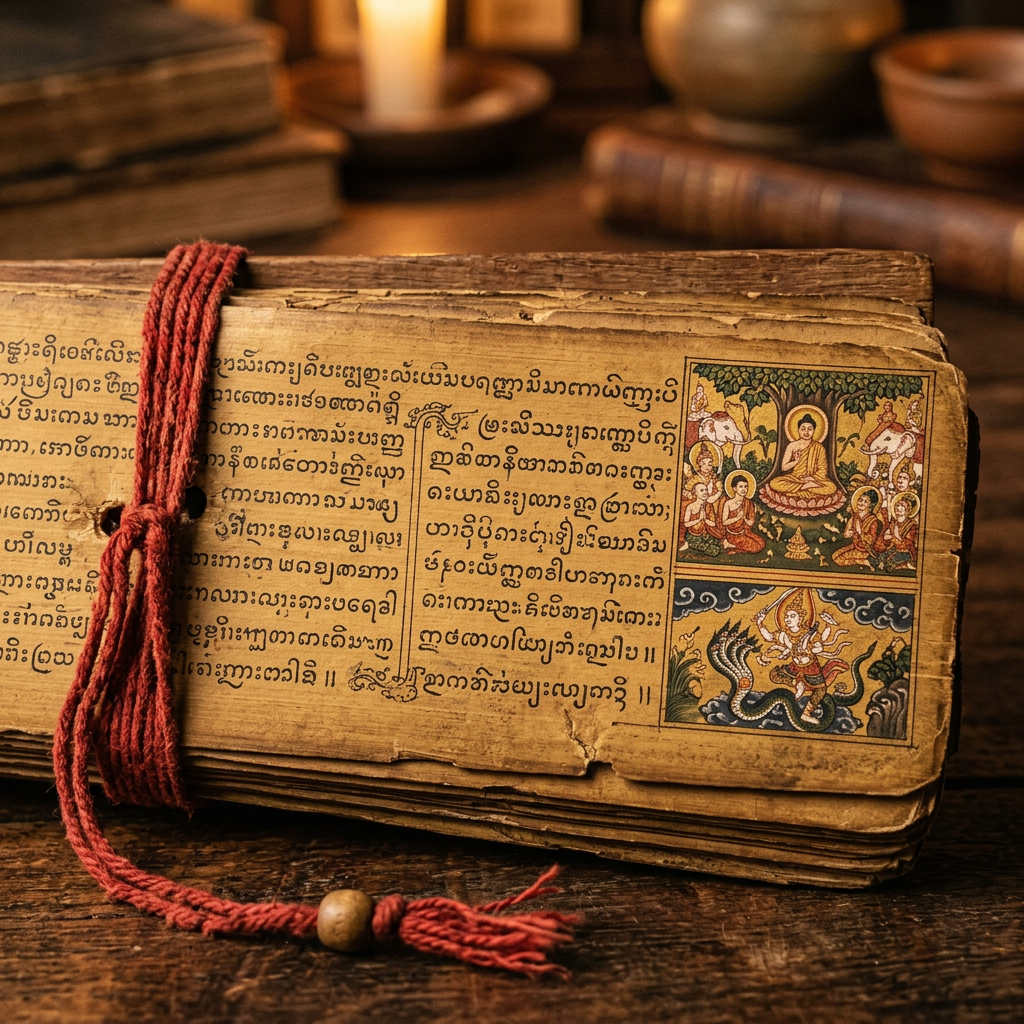
In a remote village archive in the Kamrup district of Assam, researchers have discovered a 9th-century palm-leaf manuscript titled 'Shakti-Advaita-Siddhi'. This rare text provides a unique commentary on the nature of reality, bridging the gap between the non-dualism of Advaita Vedanta and the dynamism of Shakta philosophy. The manuscript posits that the ultimate reality (Brahman) is not a passive witness but an active, creative force, defining the universe as the 'conscious play' of divine agency.
The text is attributed to a sage named Vimala-Devi, adding a significant chapter to the history of female philosophers in ancient India. It argues that the perception of 'multiplicity' is not an illusion to be discarded, but a 'luminous extension' of the One. By interpreting the Mundaka Upanishad through a lens of creative manifestation, the manuscript offers a radical departure from the ascetic-focused interpretations of the era, advocating for a philosophy of spiritual engagement within the material world.