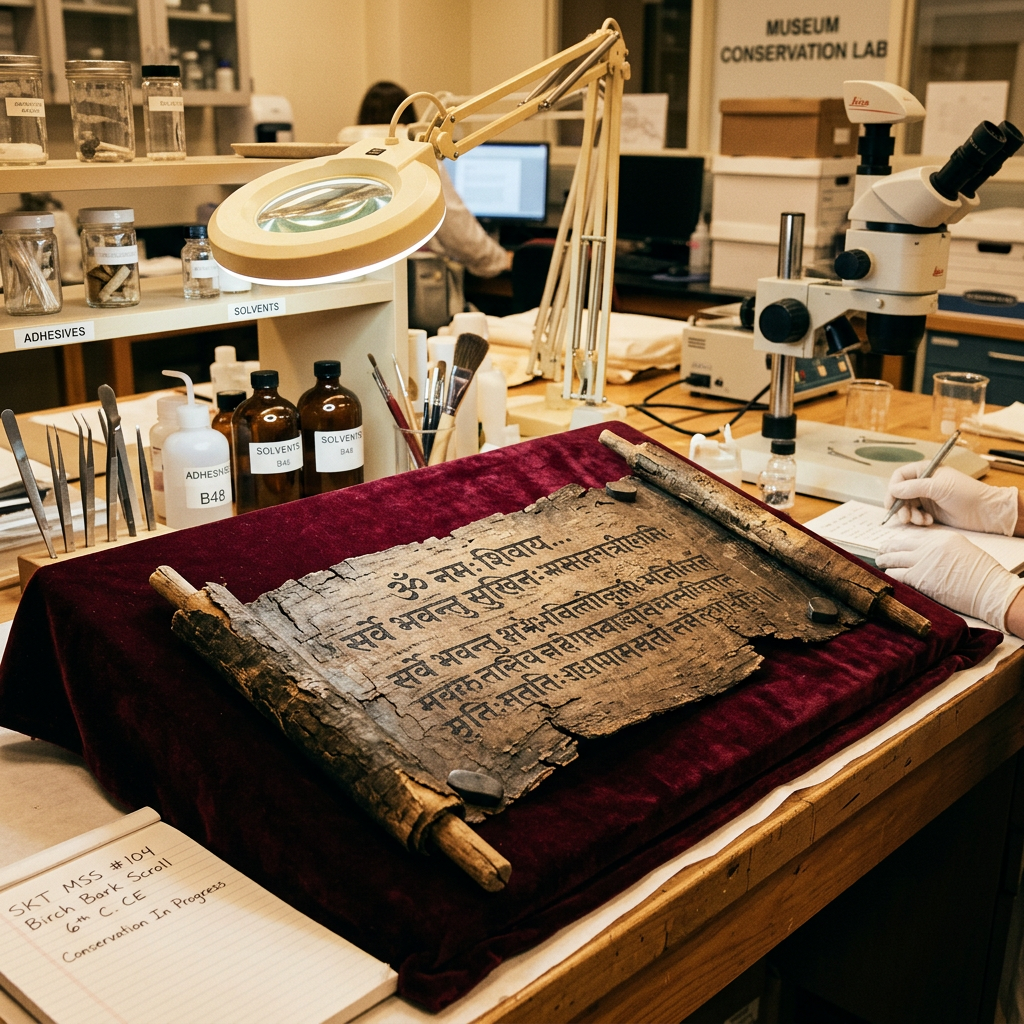
Archaeologists working in the Unakoti region of Tripura have unearthed a remarkably preserved 11th-century birch bark scroll titled 'Prana-Sakti-Viveka'. This manuscript, written in a localized variant of the Siddham script, offers a profound exploration of the Vedic philosophy of vital energy (Prana) and its role in psychological and physical resilience. Scholars suggest that this text represents a previously unknown synthesis of late Vedic thought and early Tantric traditions prevalent in Northeast India.
The text outlines a systematic approach to Atma-Raksha (self-protection) not through physical means, but through the cultivation of inner fortitude. It describes the 'Sakti' or power inherent in the breath as the primary driver of ethical agency. Preliminary translations reveal chapters dedicated to the 'Metaphysics of Endurance,' arguing that the stability of the mind is directly proportional to the refinement of one's vital breath. This discovery is expected to provide new insights into how ancient frontier communities integrated abstract Vedic metaphysics into practical codes of survival and resilience.