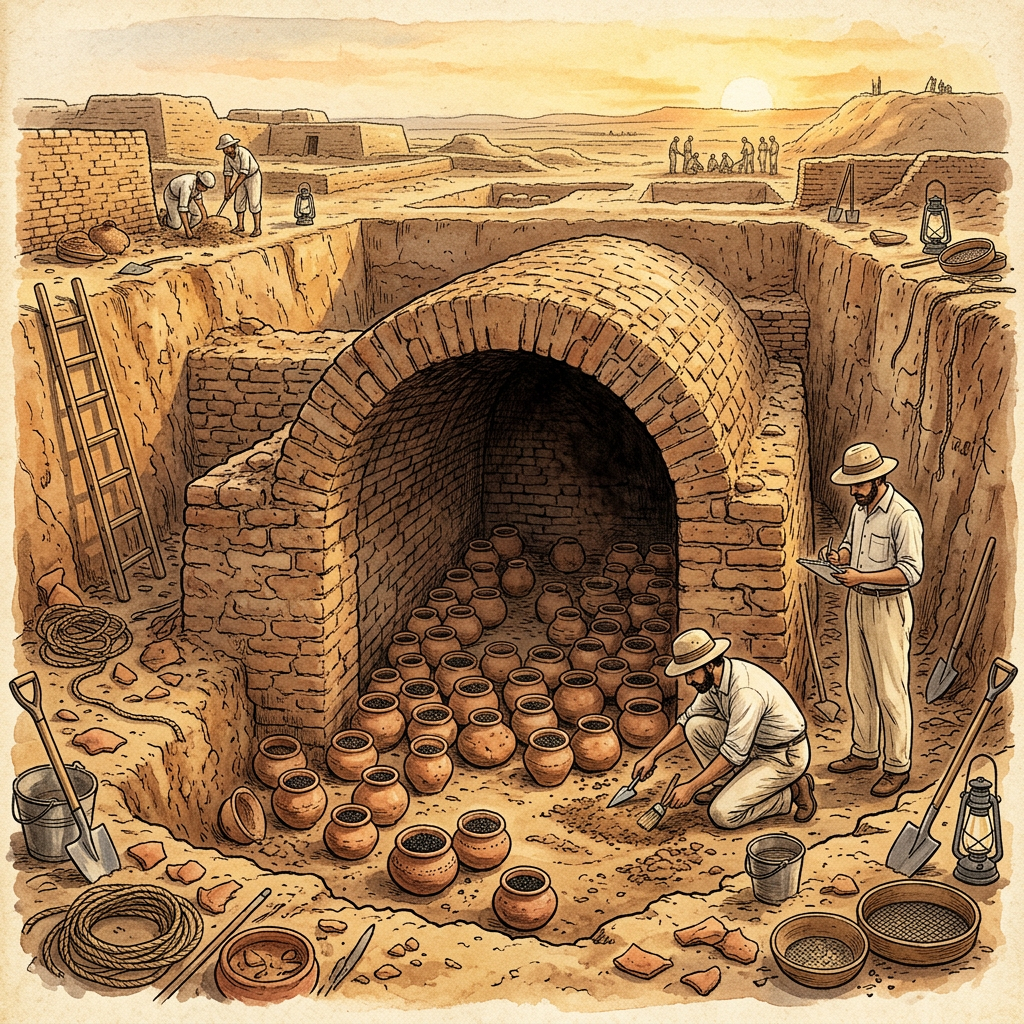
In a groundbreaking discovery at the Rakhigarhi archaeological site in Haryana, researchers have unearthed a sophisticated 'Seed Preservation Vault' dating back to the Mature Harappan period. The structure, a small subterranean chamber lined with thick layers of charcoal and lime to control moisture, contained several terracotta jars filled with carbonized remains of lentils, chickpeas, and a rare variety of wild pea. This finding suggests that the Indus Valley Civilization practiced advanced forms of long-term agricultural storage to mitigate the risks of seasonal droughts.
Analysis conducted by the Archaeological Survey of India (ASI) indicates that the vault's design utilized natural temperature regulation, maintaining a stable environment conducive to seed longevity. Researchers believe this discovery challenges the current understanding of Harappan food security strategies, moving beyond simple granaries to specialized bio-resource management. The team is now working on DNA sequencing of the seeds to trace the evolutionary lineage of modern South Asian crops.