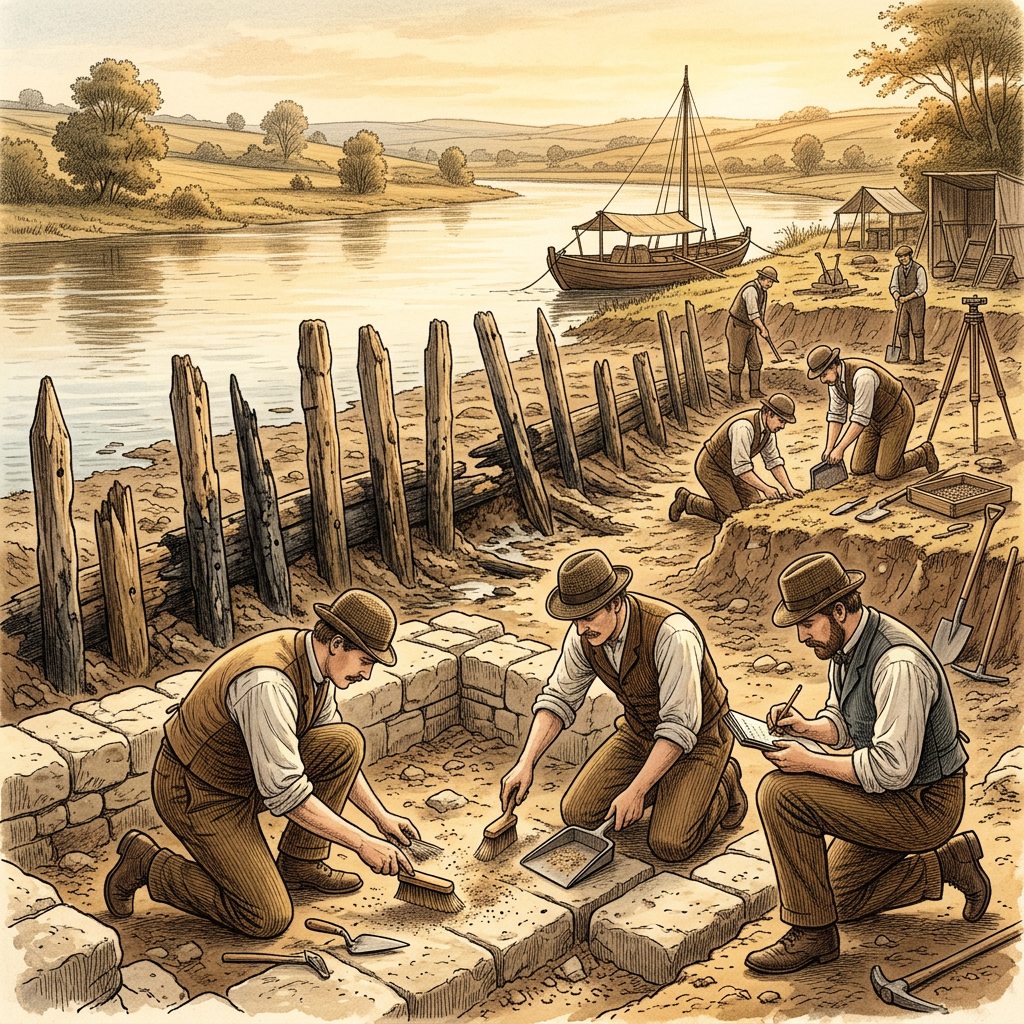
Archaeologists in Northumbria have discovered the remains of a 2nd-century Roman signal post situated on a strategic bend of the River Tyne. Unlike the larger stone forts along Hadrian's Wall, this structure was a specialized timber-and-stone hybrid designed for riverine communication. Excavations led by the Tyne Archaeology Group uncovered several inscribed lead ingots at the base of the tower, likely intended for local repairs or as ballast for small patrol vessels.
The signal post would have utilized fire or smoke signals to communicate with a nearby cavalry fort, providing early warning of tribal movements or incoming supplies from the coast. The discovery of leather tent fragments and cooking pottery within the post's foundation suggests that a small, permanent detachment of legionaries manned the station year-round. This find expands the known footprint of Roman surveillance infrastructure in the volatile borderlands of Britannia.