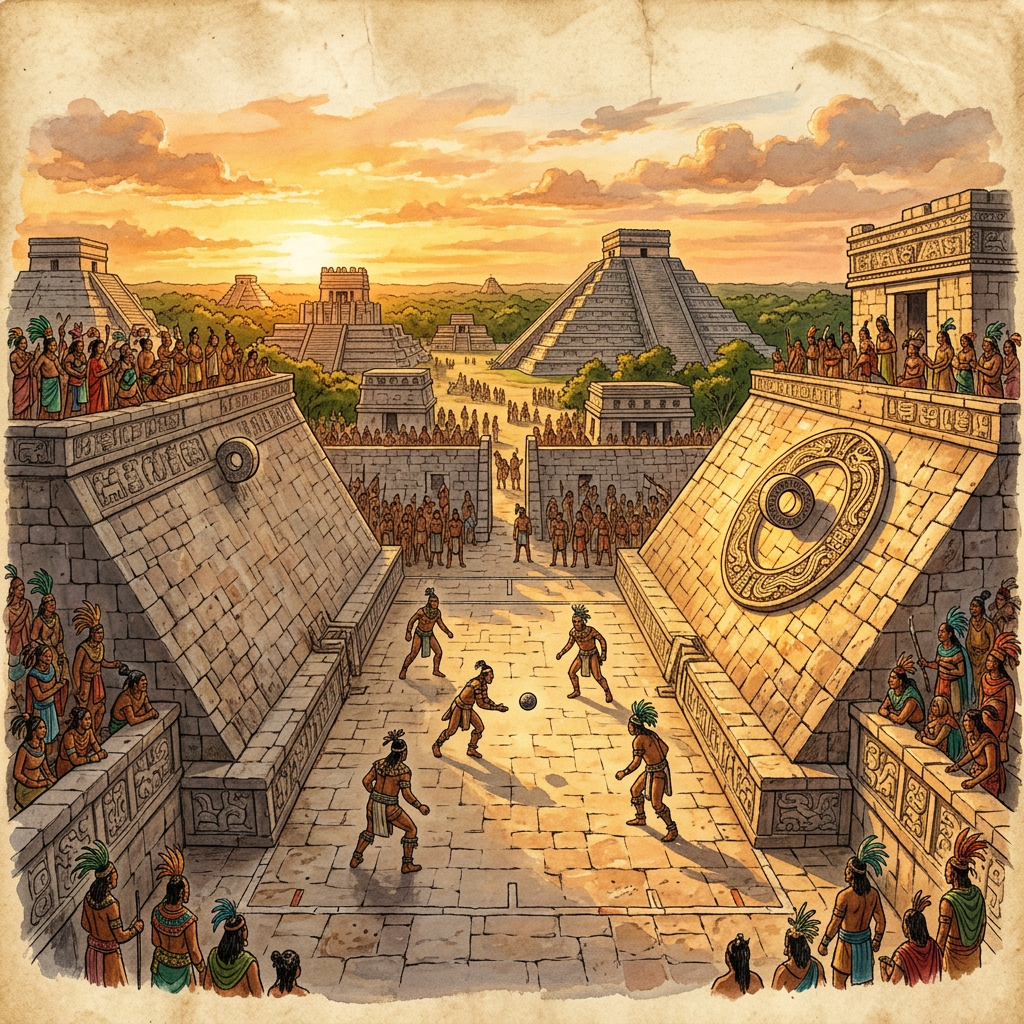
Excavations at the ancient capital of Tula in Hidalgo, Mexico, have revealed a remarkably well-preserved 10th-century ball court. The site is notable for its two intact carved stone rings, which were found still embedded in the sloping walls, a rarity in Mesoamerican archaeology due to historical looting and erosion. The rings are decorated with intricate carvings of feathered serpents and planetary symbols, aligning with the Toltec cult of Quetzalcoatl.
The mission, led by the National Institute of Anthropology and History (INAH), also uncovered several rubber ball fragments near the center of the court. Researchers state that the court's orientation suggests it was used for astronomical rituals synchronized with the movement of Venus. This discovery provides critical data on the evolution of the Mesoamerican ballgame between the fall of Teotihuacan and the rise of the Aztec Empire, highlighting Tula's role as a cultural bridge during the Early Postclassic period.