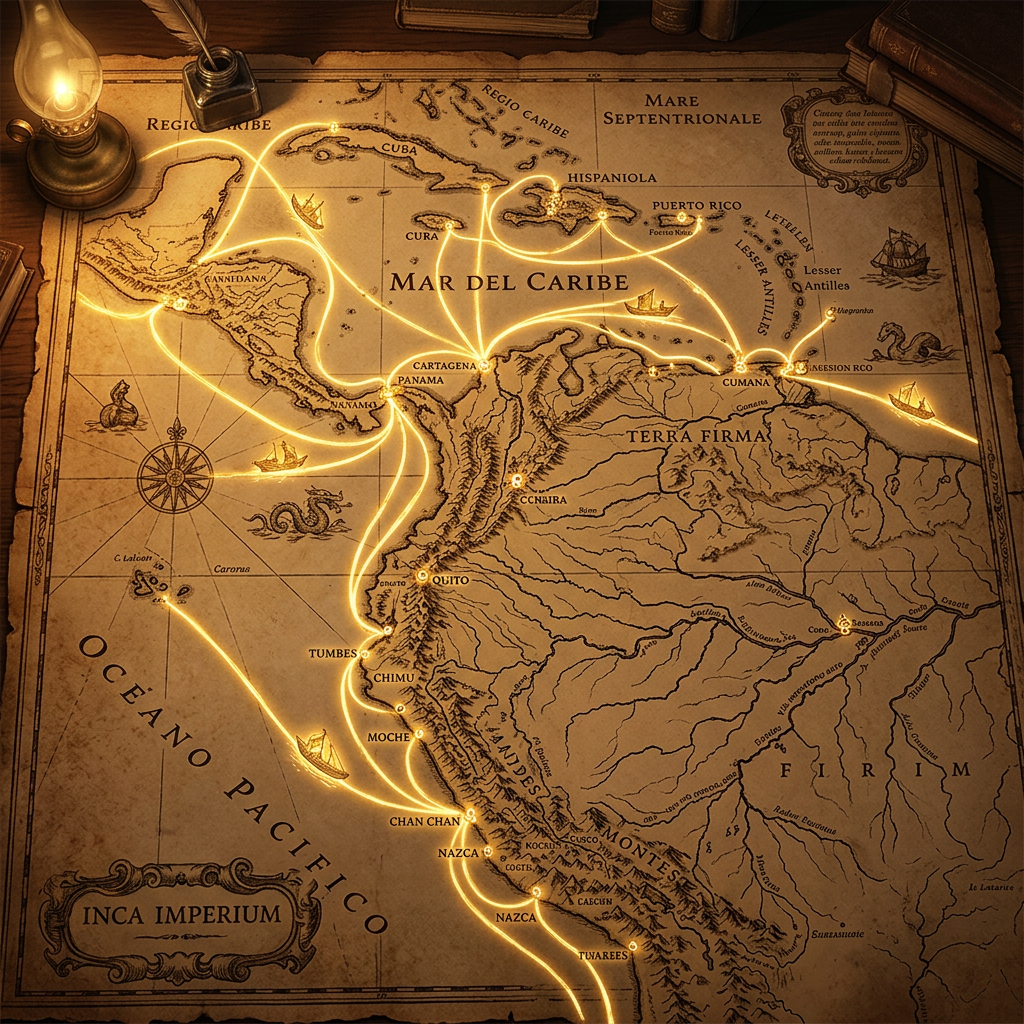
A new study published in Heritage Science Journal has identified a previously unknown luxury trade route linking the Caribbean coast to the High Andes. By utilizing advanced isotopic analysis on Spondylus shells and nephrite jade ornaments, researchers have traced a sophisticated exchange network that flourished as early as 2000 BCE. The data suggests that maritime traders navigated treacherous coastal waters to deliver ritual objects to the emerging centers of the Chavín and Cupisnique cultures.
The discovery of these "pre-Columbian sea-lanes" challenges previous theories about the isolation of early American civilizations. Scientists found that the Spondylus princeps shell, often called "red gold," served as a primary currency and status symbol, driving long-distance interactions that facilitated the spread of metallurgical techniques and religious iconography across the continent.