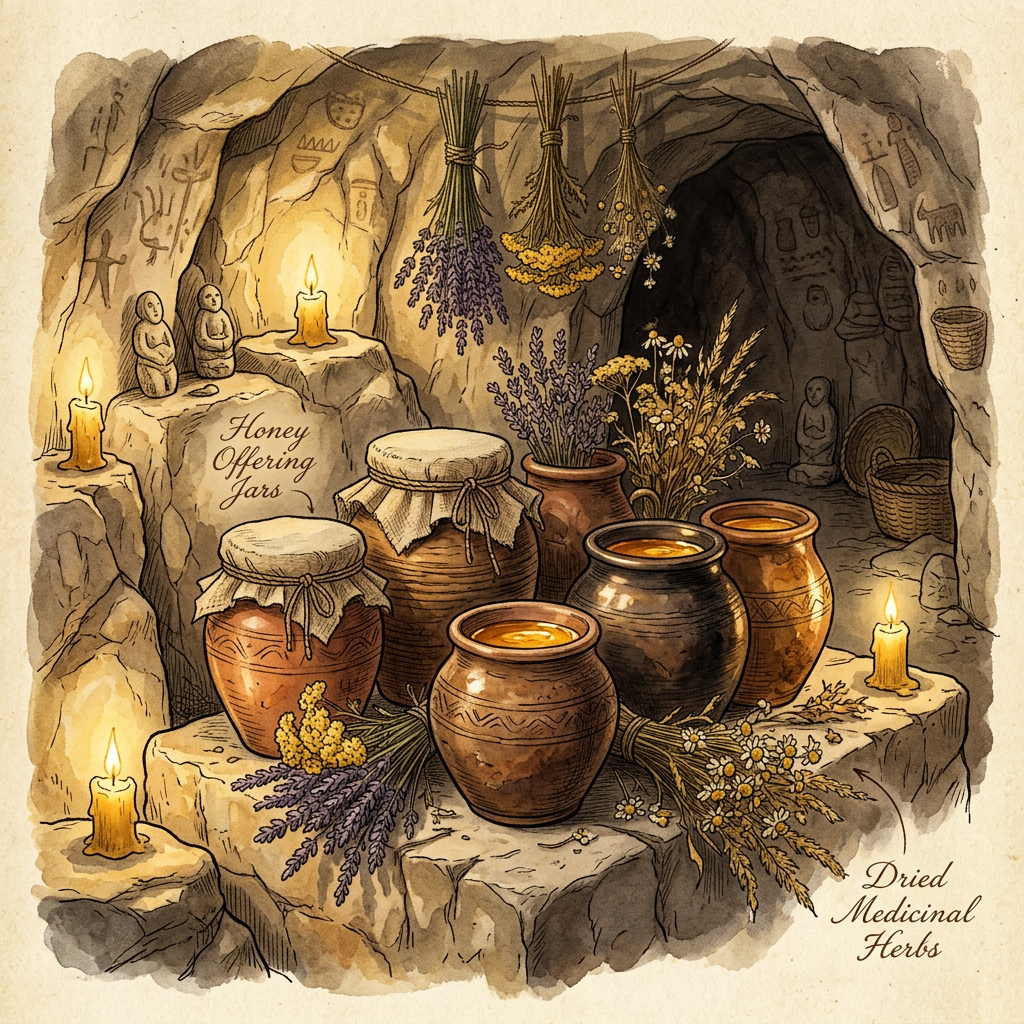
In the remote Svaneti region of the Caucasus Mountains, a cache of ceramic jars containing traces of wildflower honey and fermented alpine herbs has been unearthed. Dated to 2,000 BCE, these vessels were found within a specialized stone chamber that appears to have served as a prehistoric shrine. Chemical analysis of the residues indicates the jars held a potent honey-based beverage used during a forgotten "Spring Awakening" festival celebrating the return of pollinating bees.
The discovery is significant as it highlights the early cultural importance of apiculture in the region. Archaeologists also found bronze bee-shaped amulets near the jars, suggesting that the festival involved wearing symbolic jewelry to invoke the protection of mountain spirits. This ritualized consumption of honey points to a sophisticated understanding of seasonal cycles and the biological triggers of the mountain ecosystem in ancient Georgia.