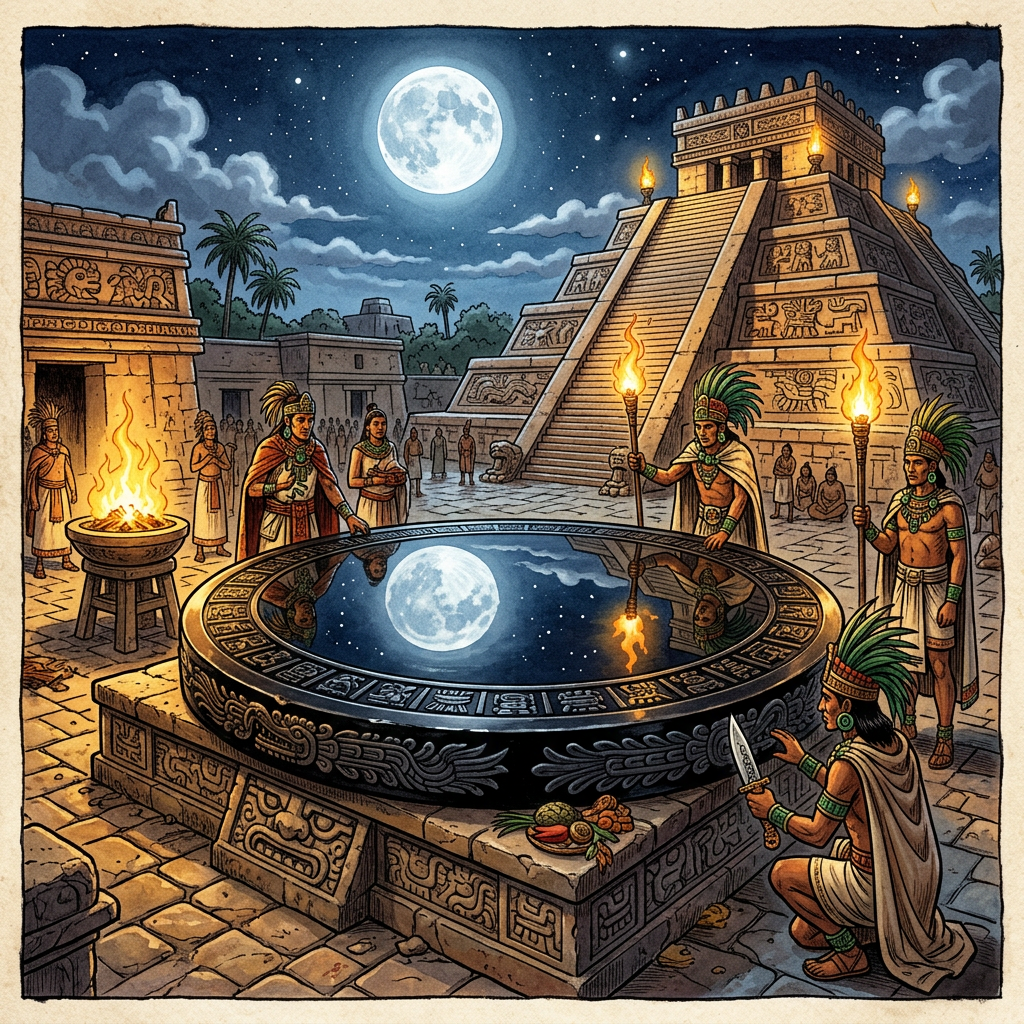
Archaeologists working at the Monte Albán site in Mexico have uncovered an extraordinary obsidian-lined platform designed for precise lunar tracking. The structure, dating back approximately 1,800 years, features highly polished volcanic glass stones arranged to reflect the moon's position during specific celestial alignments. Researchers believe this deck was the central hub for timing ancient seasonal celebrations that served as the foundational roots for the modern-day Guelaguetza festival.
Excavations revealed that the platform was surrounded by a layer of ceremonial ash and microscopic remains of agave-based offerings. This suggests that the Zapotec people held massive nocturnal gatherings here to welcome the lunar new year, involving communal drinking and rhythmic dancing. The find provides the first physical evidence of a permanent structure dedicated specifically to the synchronization of the agricultural calendar with public ritual performances.