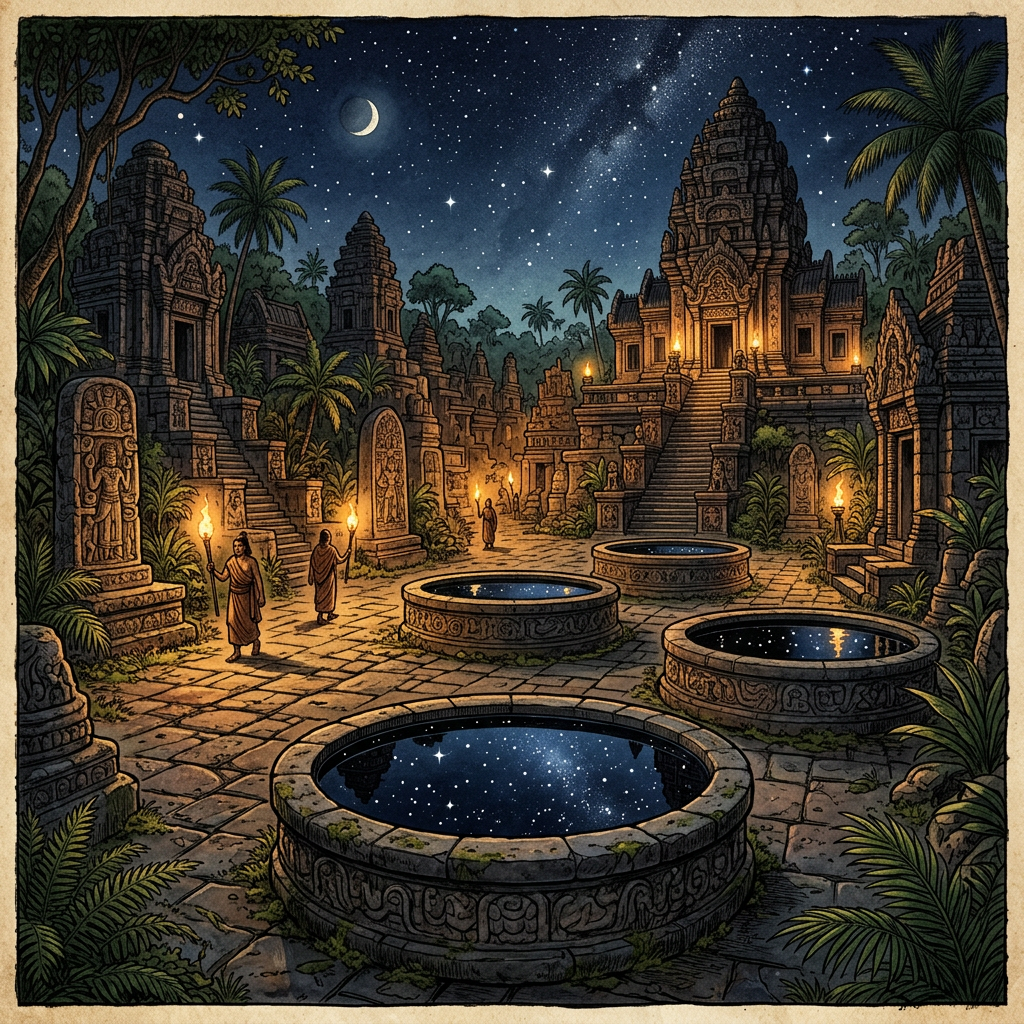
Archaeologists from the University of Kelaniya have discovered a network of stone water-mirror basins in the ancient city of Anuradhapura. These basins, which predate the introduction of Buddhism to the island by several centuries, were engineered to remain perfectly still, allowing the night sky to be reflected on the water's surface. Researchers believe these were used during "Rain-Calling" festivals where priests would read the celestial reflections to predict the coming monsoon.
The basins are surrounded by small stone platforms that show signs of long-term use for communal chanting and fire offerings. This discovery provides a vital link to the Esala Perahera traditions, suggesting that the island's famous water-based rituals have origins in indigenous astronomical practices that were later integrated into Buddhist festivities. The precision of the stonework indicates a high degree of hydraulic engineering and ritual specialization.