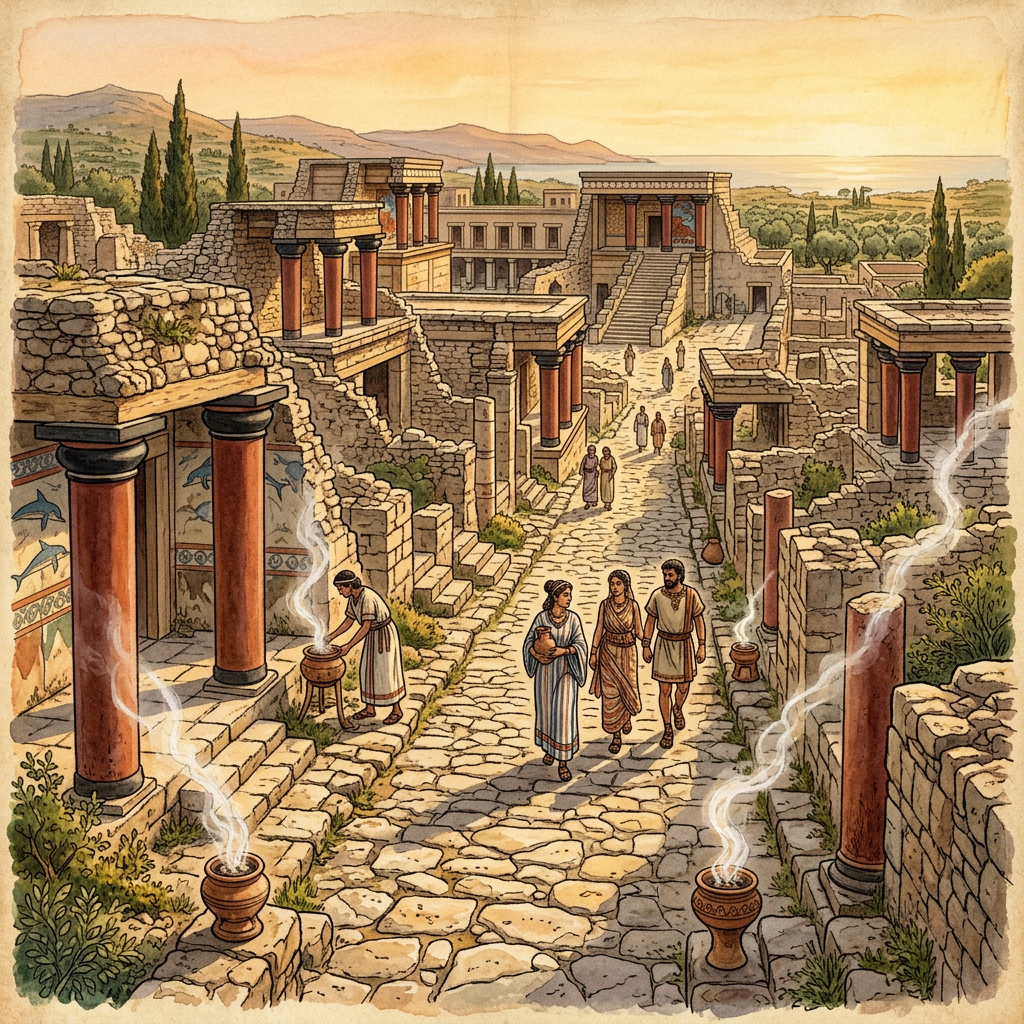
A monumental processional pavement spanning nearly 200 meters has been uncovered near the Palace of Knossos in Crete. The stones show distinct wear patterns from heavy foot traffic and are deeply impregnated with the chemical markers of myrrh and frankincense. Archaeologists suggest this route was the primary path for the annual "Sea-Goddess" festival, where thousands of worshippers would march from the palace to the coast to bless the fishing fleet.
Adjacent to the path, researchers found the remains of temporary booths made of wood and reed, which likely served as stalls for food and ritual trinkets, marking one of the earliest known examples of a festival marketplace. The discovery shifts the understanding of Minoan religious life from purely internal palace rites to massive, public, and highly organized outdoor communal celebrations that involved the entire city population.