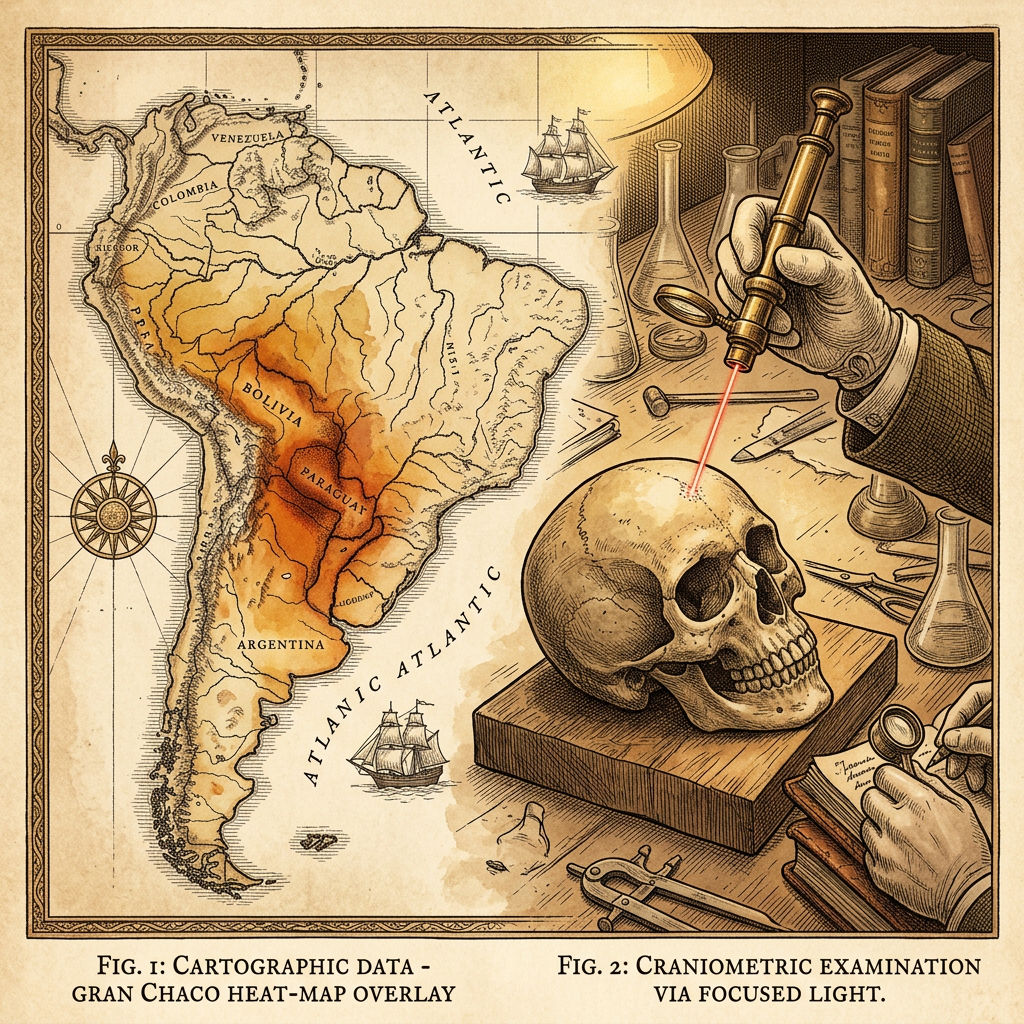
Geneticists writing in the Genetic Heritage Journal have published a landmark study on 9,500-year-old skeletal remains discovered in the Gran Chaco region of South America. The genomic analysis revealed a highly specialized variant of the TRPV1 gene, which is associated with thermoregulation and the body's ability to sense and respond to rapid temperature shifts. This adaptation allowed early inhabitants of the region to survive extreme diurnal cycles, where temperatures can swing by over 30 degrees Celsius between day and night.
This study marks the first time such a specific metabolic adaptation has been identified in a Holocene-era population in the Americas. The research indicates that the Gran Chaco foragers were not merely transient migrants but a highly specialized population that had lived in the region long enough to undergo significant epigenetic and genomic shifts. The findings provide critical data on how early humans colonized the diverse and often hostile micro-climates of the South American interior after the initial peopling of the continent.