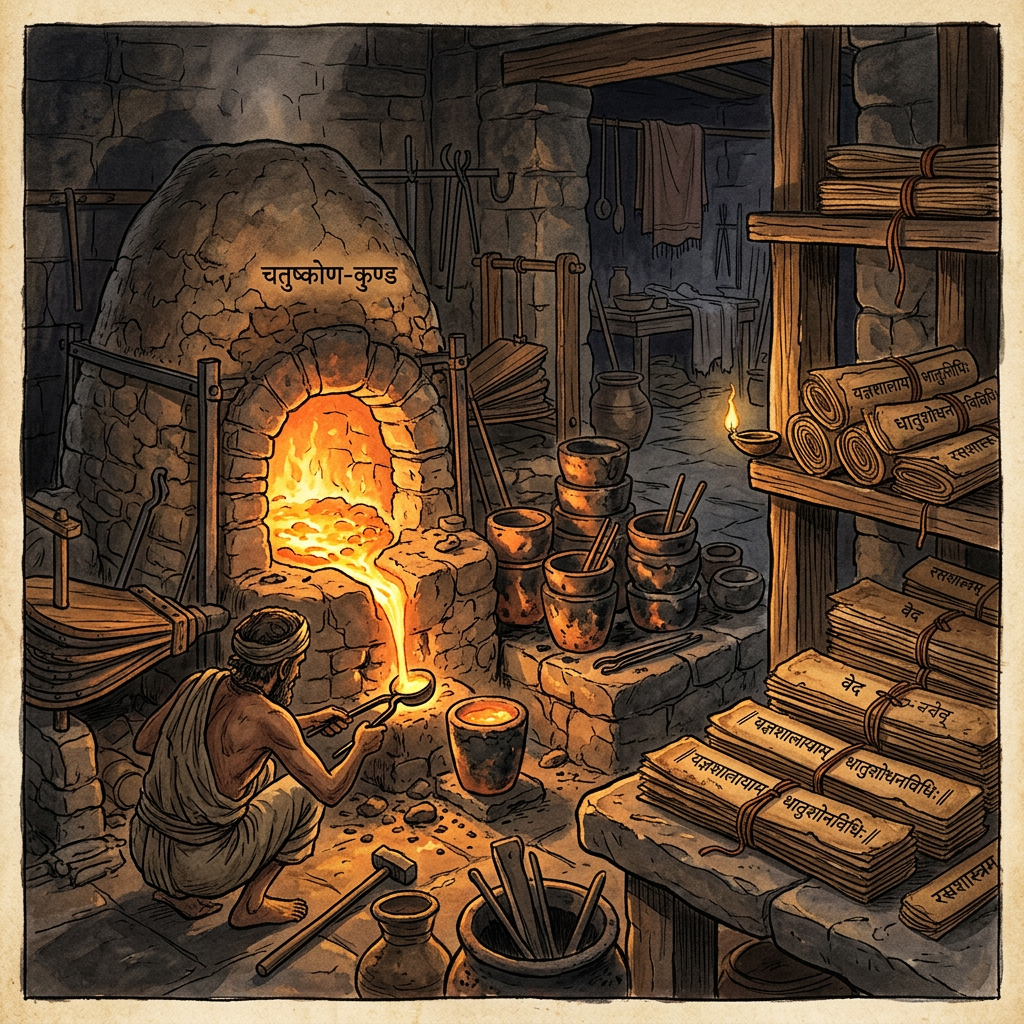
New research into 10th-century Loha-Shastra (Science of Metals) manuscripts from a collection in Madhya Pradesh has revealed detailed chemical protocols for the synthesis of high-purity chromium-bronze. The study, conducted by metallurgical scientists at the Archaeological Science Quarterly, identifies specific Sanskrit terms describing the addition of pulverized chromite ores to molten copper and tin in a controlled anaerobic furnace environment.
The resulting alloy demonstrates exceptional hardness and resistance to oxidation, features that were previously thought to have been unattainable without modern industrial smelting processes. Micro-spectroscopic analysis of contemporary artifacts from the Paramara dynasty sites suggests that this specialized bronze was used exclusively for high-precision scientific instruments and ritual weaponry. The researchers argue that these manuscripts represent a high point of ancient Indian metallurgy, where chemical theory was systematically applied to create superior materials through advanced pyrotechnology.