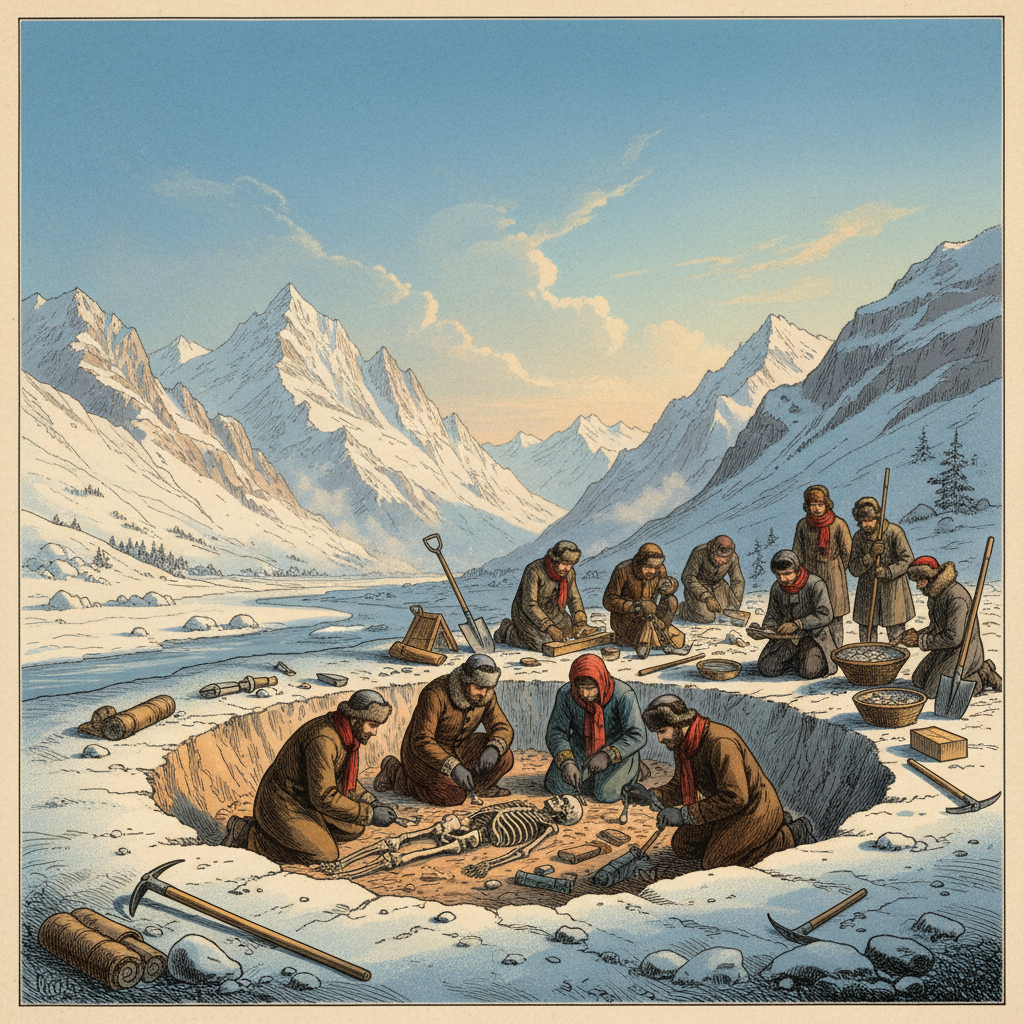
Research published in the latest volume of Science Advances: Genomics has identified a distinct, previously unknown genetic lineage of late Pleistocene hunter-gatherers in the Altai-Sayan Foothills. By analyzing the teeth and bone fragments of four individuals dating to approximately 13,500 years ago, researchers discovered a "ghost" population that split from West Eurasian groups before the peak of the last ice age and remained isolated in the Siberian refugia.
This group, characterized by high levels of genetic resilience to hyper-arctic conditions, appears to have initiated a migration pulse into the Eurasian tundra as the glaciers began to retreat. The findings challenge current models of Siberian colonization, suggesting that the genetic landscape of Northern Asia was far more fragmented and dynamic than previously believed. This new lineage contributes approximately 8% to the ancestry of later Neolithic groups in the region, indicating a significant but localized genetic exchange during the transition to the Holocene.