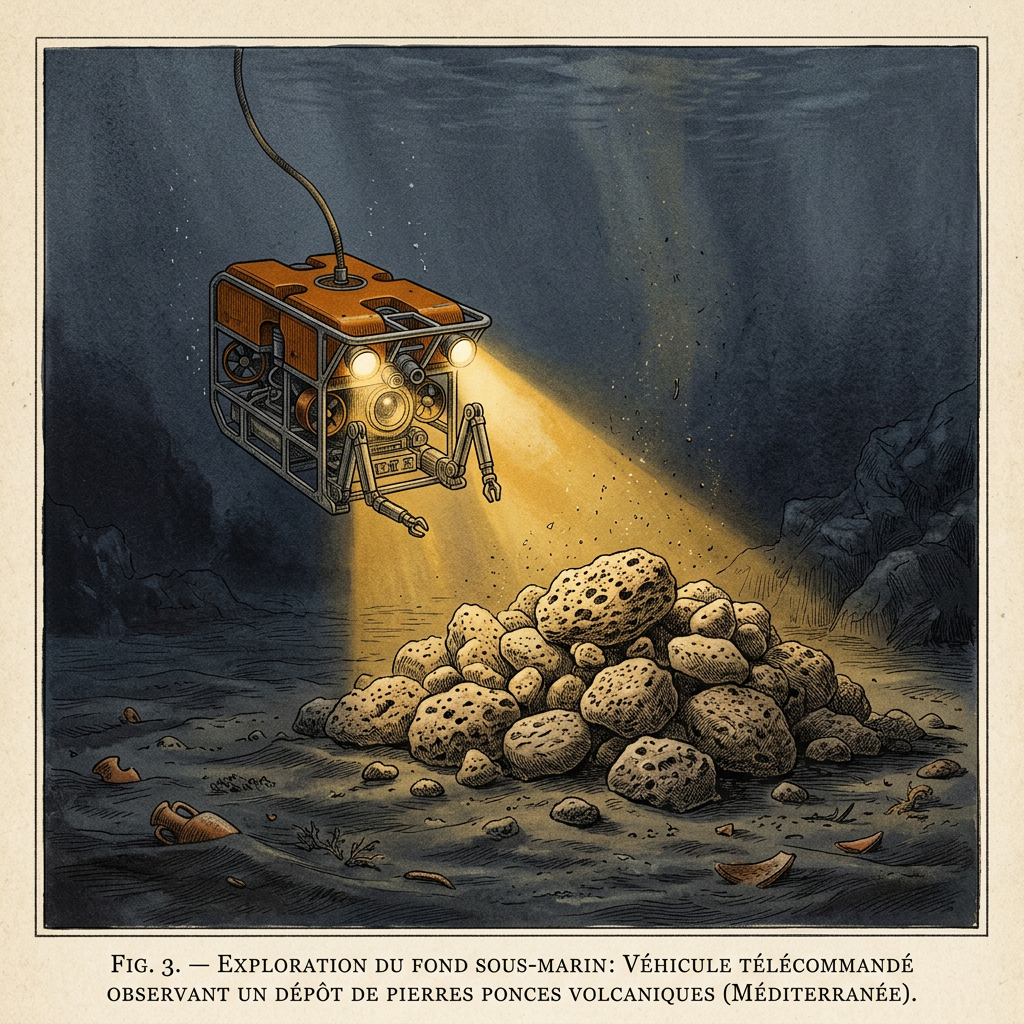
Marine archaeologists using deep-sea submersibles have discovered a series of shipwrecks along a previously unknown maritime corridor dubbed the "Pumice Trail." This 3,500-year-old trade route facilitated the transport of high-quality volcanic pumice from the island of Thera (Santorini) to construction sites and cosmetic workshops across the Levantine coast.
Chemical analysis of the cargo reveals that the pumice was specifically sought after for its abrasive properties in metal polishing and as a lightweight additive in early harbor masonry. The discovery provides new insights into the Late Bronze Age economy and the high degree of specialization in maritime bulk-commodity exchange.