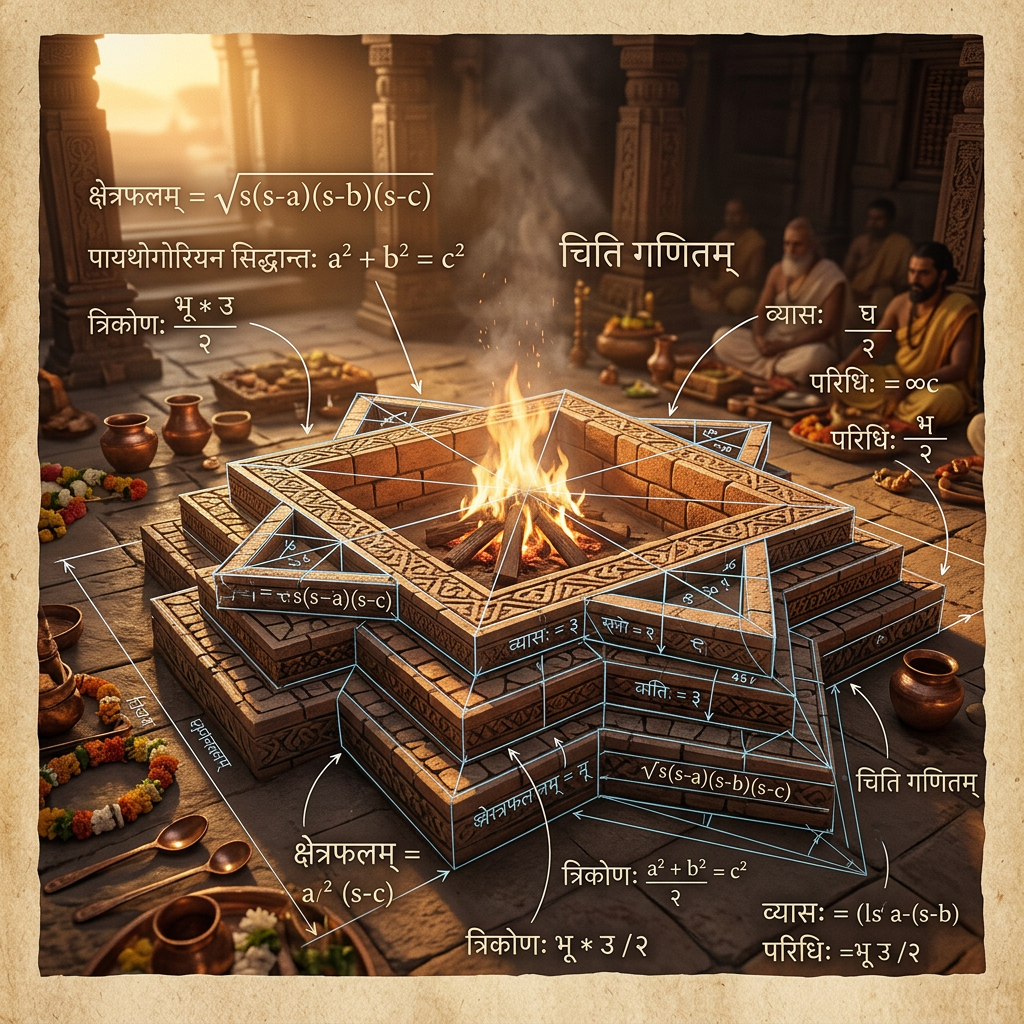
A computational analysis featured in the Journal of Archaeological Science has uncovered evidence of advanced iterative algorithms within the Baudhayana Sulba Sutras. While these texts are known for their geometric proofs, the new study demonstrates that Vedic scholars utilized geometric progression sequences to scale ritual altars of varying complexity. This mathematical approach allowed for the precise expansion of volumes while maintaining the sacred ratios required for Vedic fire rituals.
By applying modern algorithmic modeling to the Sanskrit verses, researchers found that these ancient methods provide a recursive solution for constructing irregular polygons that predates similar Euclidean techniques by centuries. The study argues that the mathematical rigor found in these ritual manuals reflects a sophisticated proto-science of architectural engineering, designed to ensure structural and symbolic integrity in large-scale temple foundations.