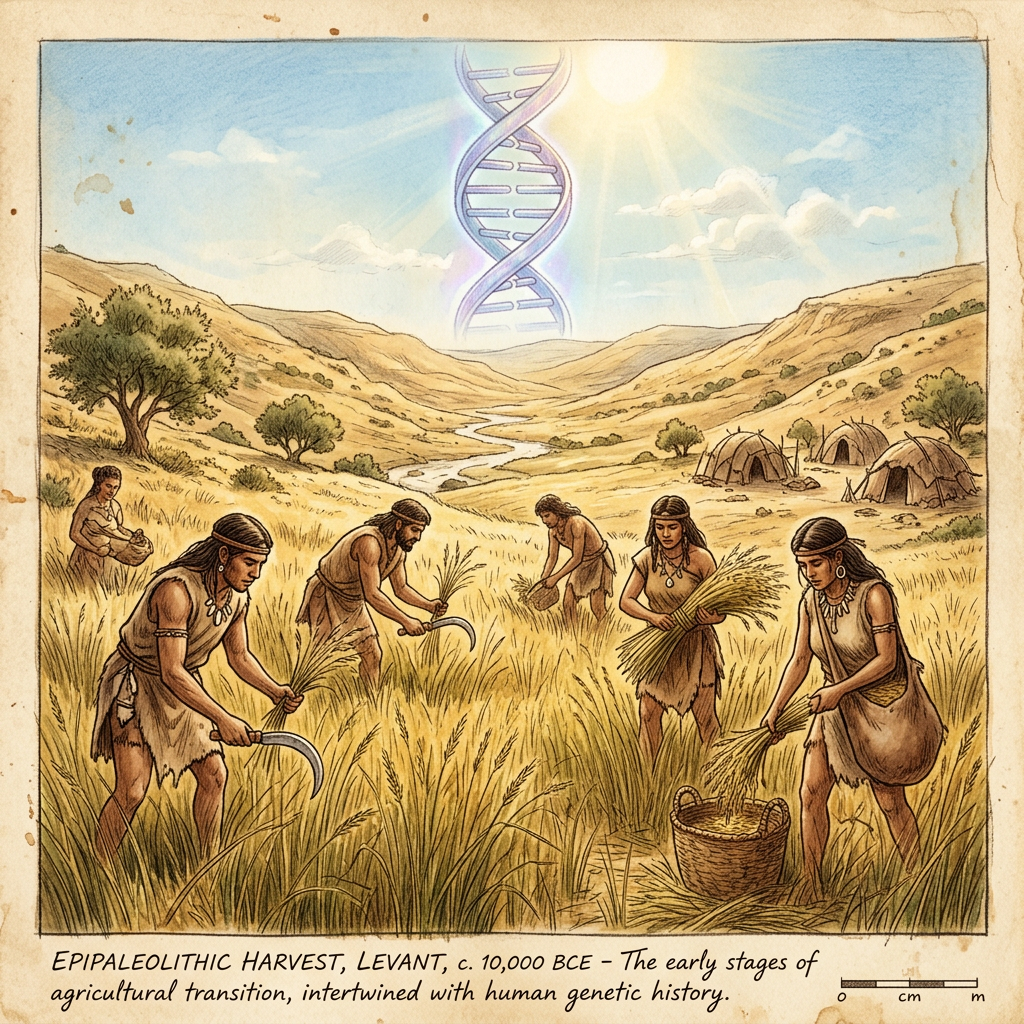
A comprehensive study in Cell Reports has mapped the genome of 11,000-year-old remains from the Levant, revealing a critical turning point in human evolution. Researchers identified the earliest known genetic adaptation to cereal-borne fungal pathogens, such as ergot. This adaptation allowed early hunter-gatherers to safely consume larger quantities of wild grains, effectively paving the way for the eventual transition to permanent agriculture.
The study found that this genetic divergence occurred just as the climate began to stabilize at the end of the Younger Dryas, leading to an abundance of wild grasses. By developing metabolic resilience to the toxins produced by grain-associated fungi, this population gained a significant competitive advantage. This research provides a genetic link between human biology and the ecological shift that triggered the first agricultural civilizations in the Fertile Crescent.