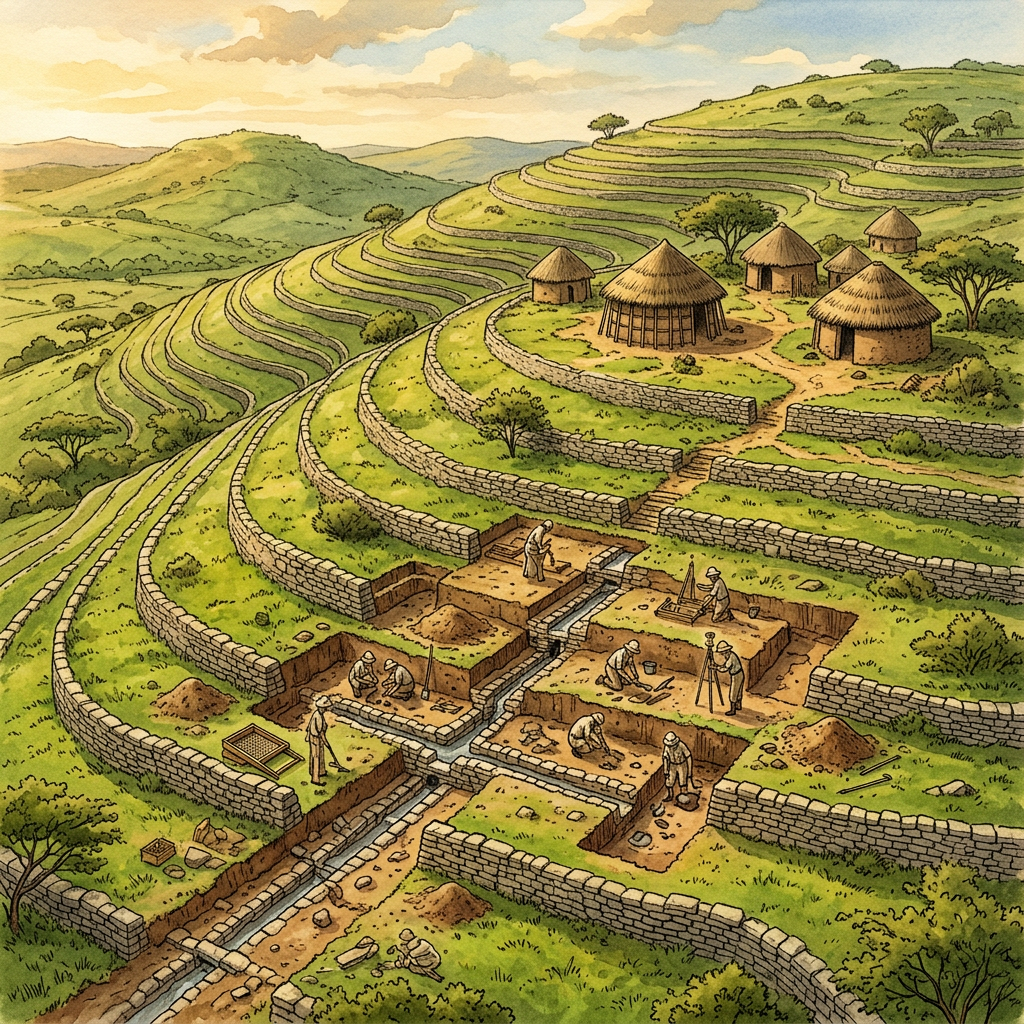
New research at the Nyanga Terraces in eastern Zimbabwe has uncovered a complex system of stone-lined channels and ritual basins that were not intended for irrigation, but for ceremonial seed purification. Archaeologists believe these structures were the focal point of an annual pre-colonial harvest festival where community leaders would ritually 'wash' the seeds of the upcoming season in mountain spring water.
The excavation revealed specialized 'altar stones' placed at the junctions of the water channels, where small ceramic figurines of cattle and grain stalks were deposited as votive offerings. These findings suggest that the agricultural heritage of the region was deeply intertwined with spiritual festivals that sought to harmonize human labor with the natural cycles of the landscape. The site dates back to the 13th century, providing a long-term context for modern Shona traditional ceremonies.