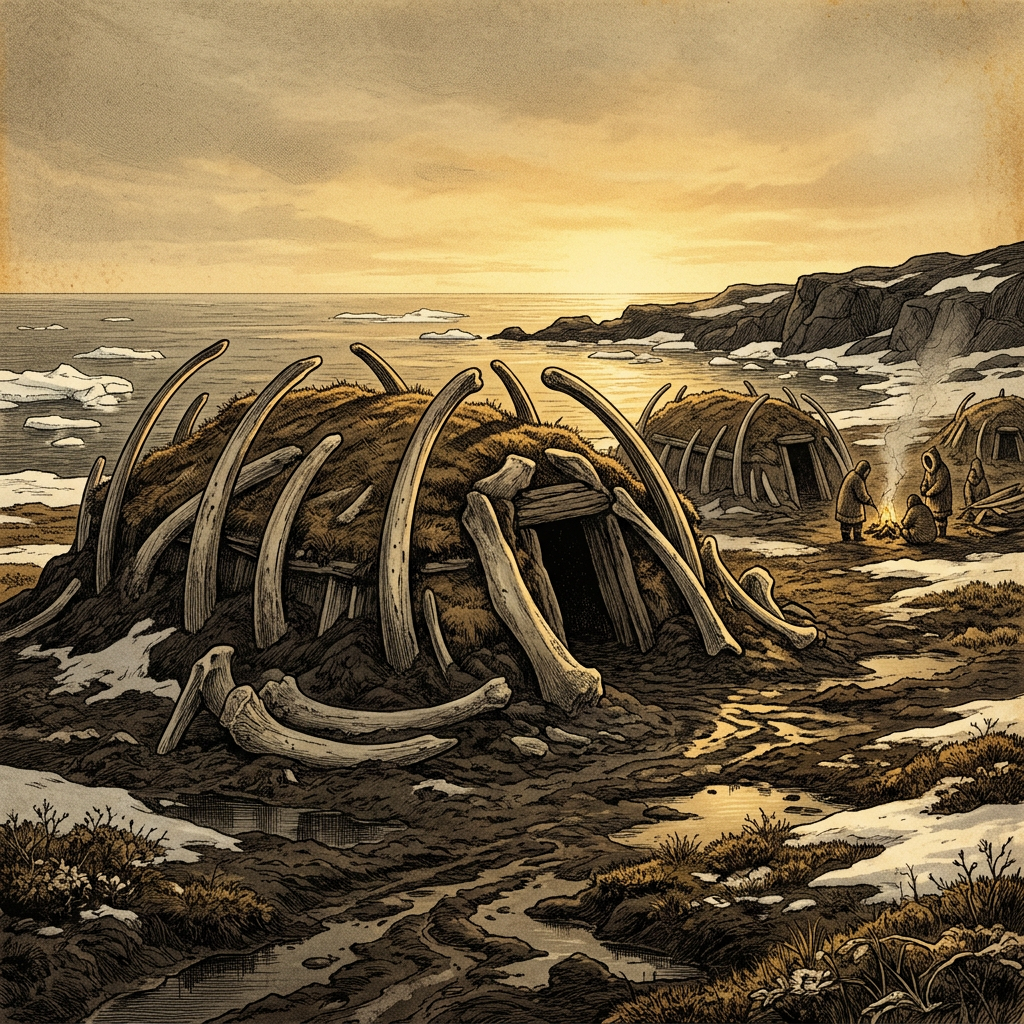
Rapidly thawing permafrost along Russia’s Kara Sea coast has revealed an exceptionally well-preserved settlement made entirely of bowhead whalebones. Dated to approximately 2,500 BCE, the site contains intact tools, skin clothing, and ivory carvings belonging to a previously unknown Paleo-Siberian maritime culture.
Climate change is acting as a double-edged sword for archaeology; while the thaw exposes these incredible sites, it also leads to rapid decomposition. Researchers are rushing to document the architectural techniques used by these ancient whale hunters, which show a sophisticated understanding of insulating structures against the extreme Arctic environment.