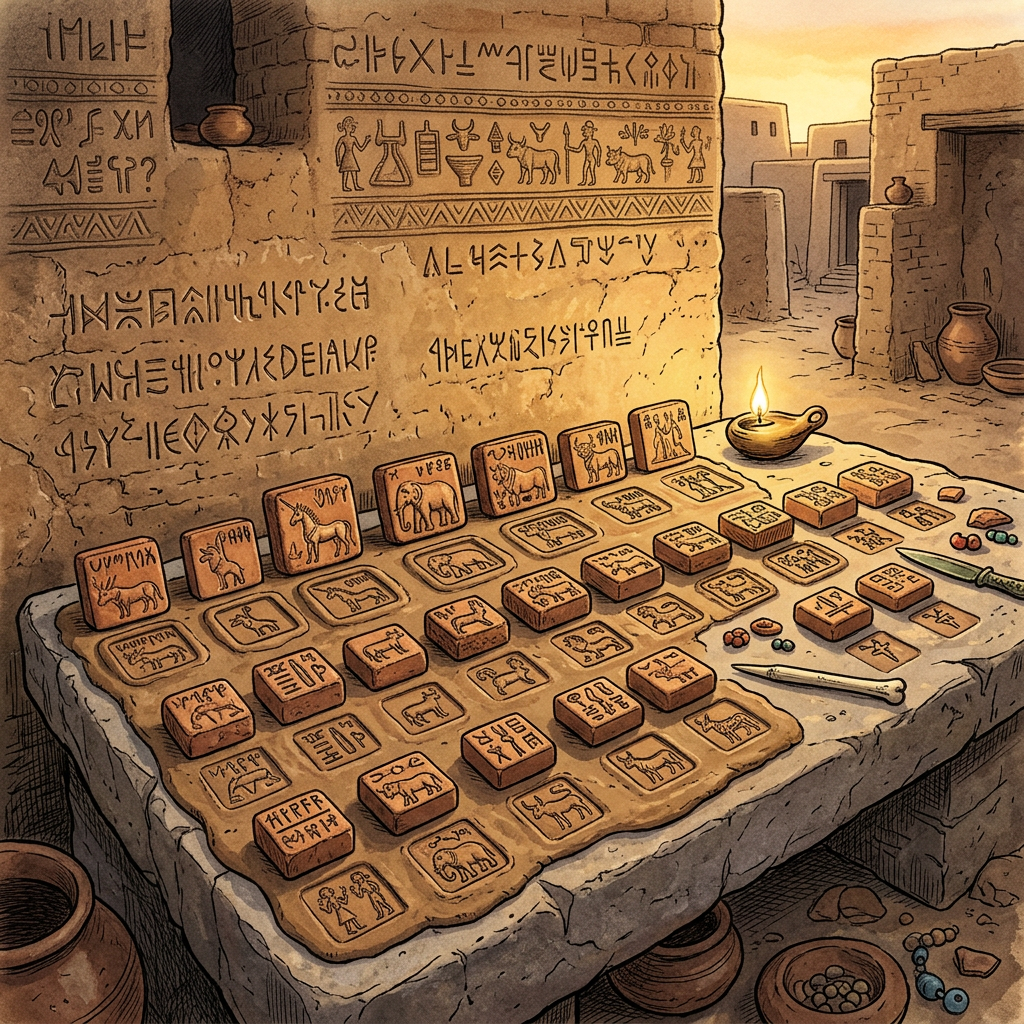
Archaeologists excavating a newly identified satellite settlement in the Ghaggar-Hakra river basin have unearthed a significant administrative archive dating back to the Mature Harappan period. The discovery includes over 150 terracotta sealings—clay imprints used to secure traded goods—which were found in a specialized chamber of a large mud-brick building. These sealings reveal intricate motifs of unicorns, humped bulls, and early Indus script, providing fresh evidence of the bureaucratic rigor of the Indus Valley Civilization.
The excavation team noted that the site appears to have served as a specialized logistics waystation for goods moving between the urban centers of Rakhigarhi and the resource-rich Himalayan foothills. Preliminary analysis of the clay imprints suggests they were used on organic materials like reeds and woven textiles, some of which left faint impressions on the reverse side of the clay. This find is expected to clarify the internal trade hierarchies and regional administrative structures of the Indus valley's peripheral settlements.