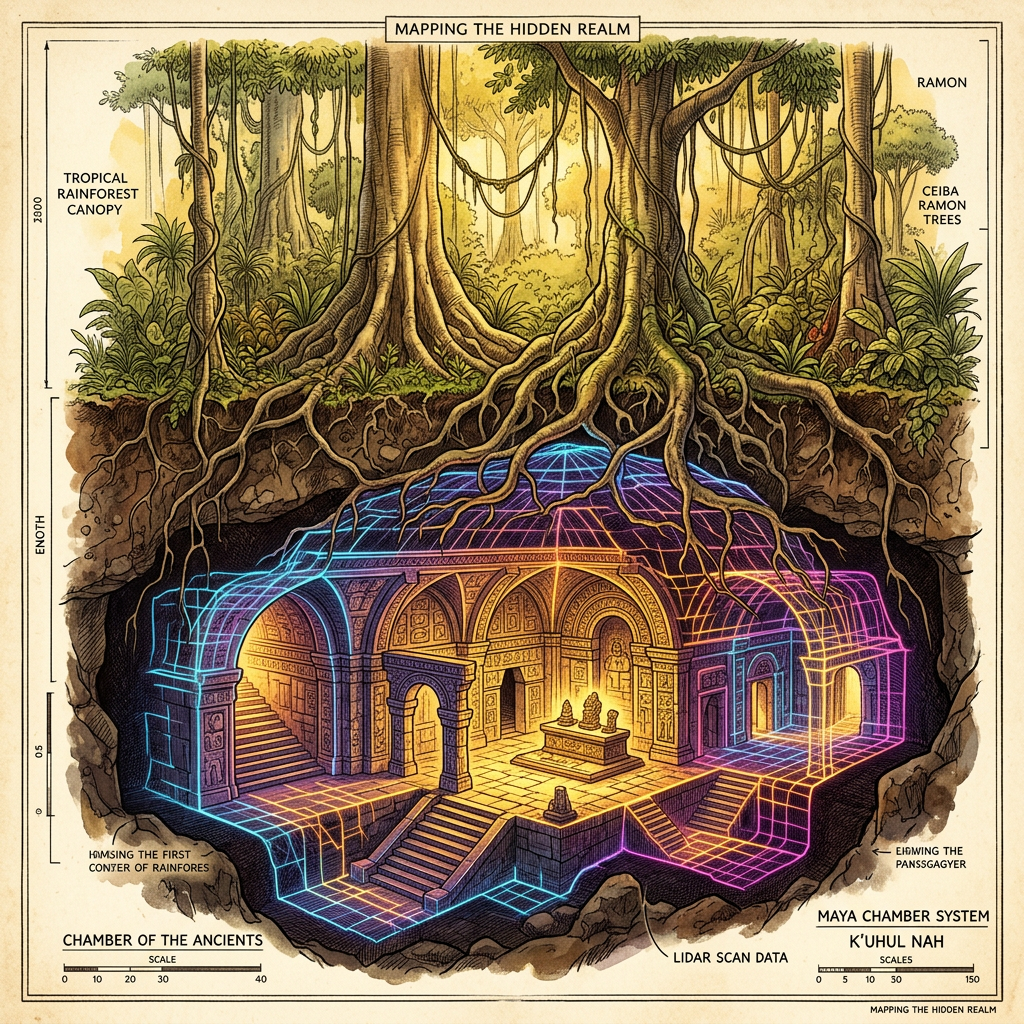
A new aerial LiDAR survey of the dense Petén jungle in Guatemala has mapped a previously unknown network of subterranean structures adjacent to a major Classic-period Maya ceremonial center. The laser-based mapping identified several large chultunes (underground cisterns) that were modified into ritual spaces. Ground-truthing of the site revealed that these chambers contain intricately carved stone statues of the Maya rain god, Chaac, suggesting they were used for water-based religious ceremonies during periods of drought.
This discovery challenges the traditional view of Maya water management as purely functional, indicating a deeply integrated spiritual dimension to their hydraulic engineering. The LiDAR data also suggests a series of hidden causeways connecting these underground shrines to the main city plazas, indicating a complex ritual landscape that was intentionally obscured from surface view. Researchers believe these sites were critical to the city's political stability during the environmental stresses of the late 9th century.