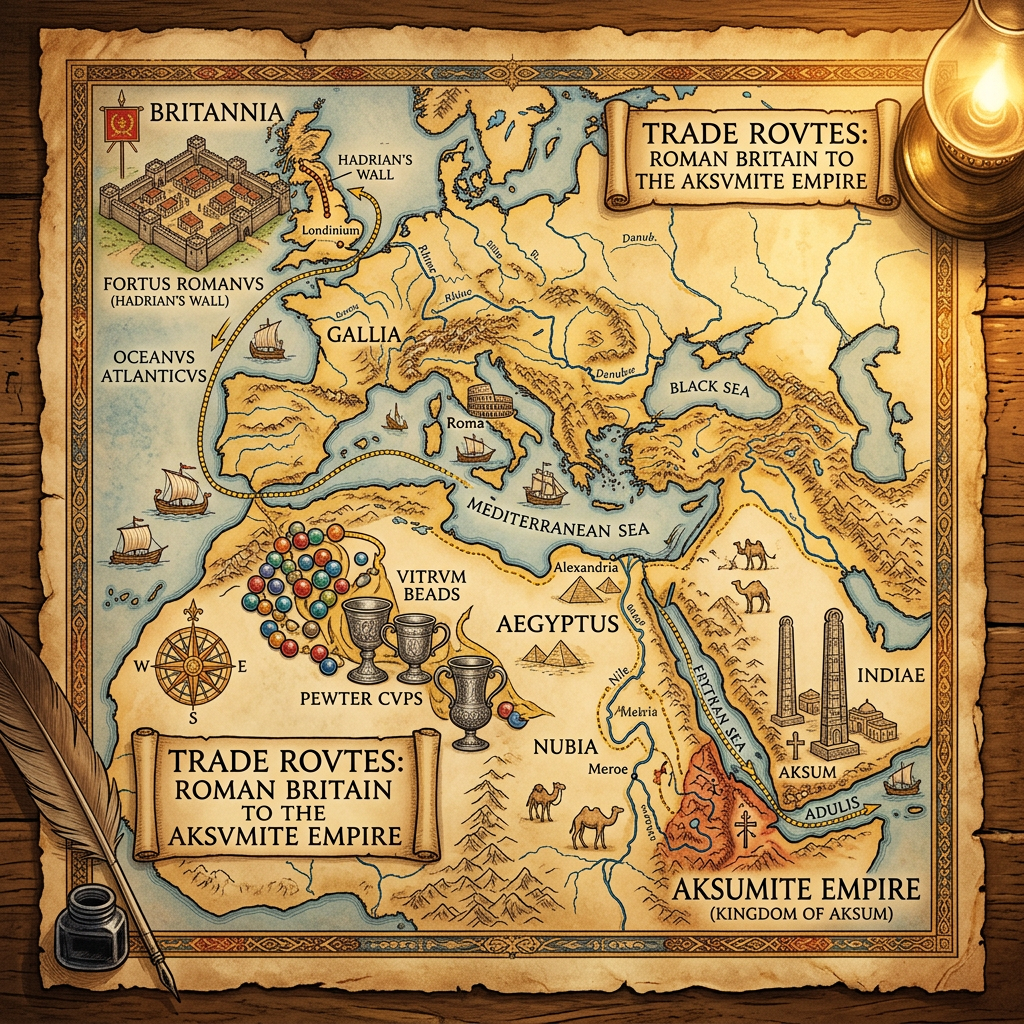
Archaeologists and historians have identified a previously undocumented 1,800-year-old luxury trade link known as the 'Pewter and Glass' Route. By analyzing the chemical signatures of pewter vessels found in the highlands of modern-day Ethiopia and glass beads unearthed in Roman Britain, researchers have mapped a complex network connecting the North Atlantic to the Horn of Africa. This discovery suggests that the Aksumite Empire played a far more central role in global maritime trade than previously understood.
The study reveals that high-purity tin from British mines was transported via the Mediterranean and the Red Sea in exchange for ivory, gold, and rare resins. This findings challenge the traditional view of Roman trade being limited to the Mediterranean basin, highlighting a highly integrated global economy in the 2nd century CE. The research was made possible through advanced isotopic fingerprinting and the study of sunken merchant vessels recently discovered along the Sudanese coast.