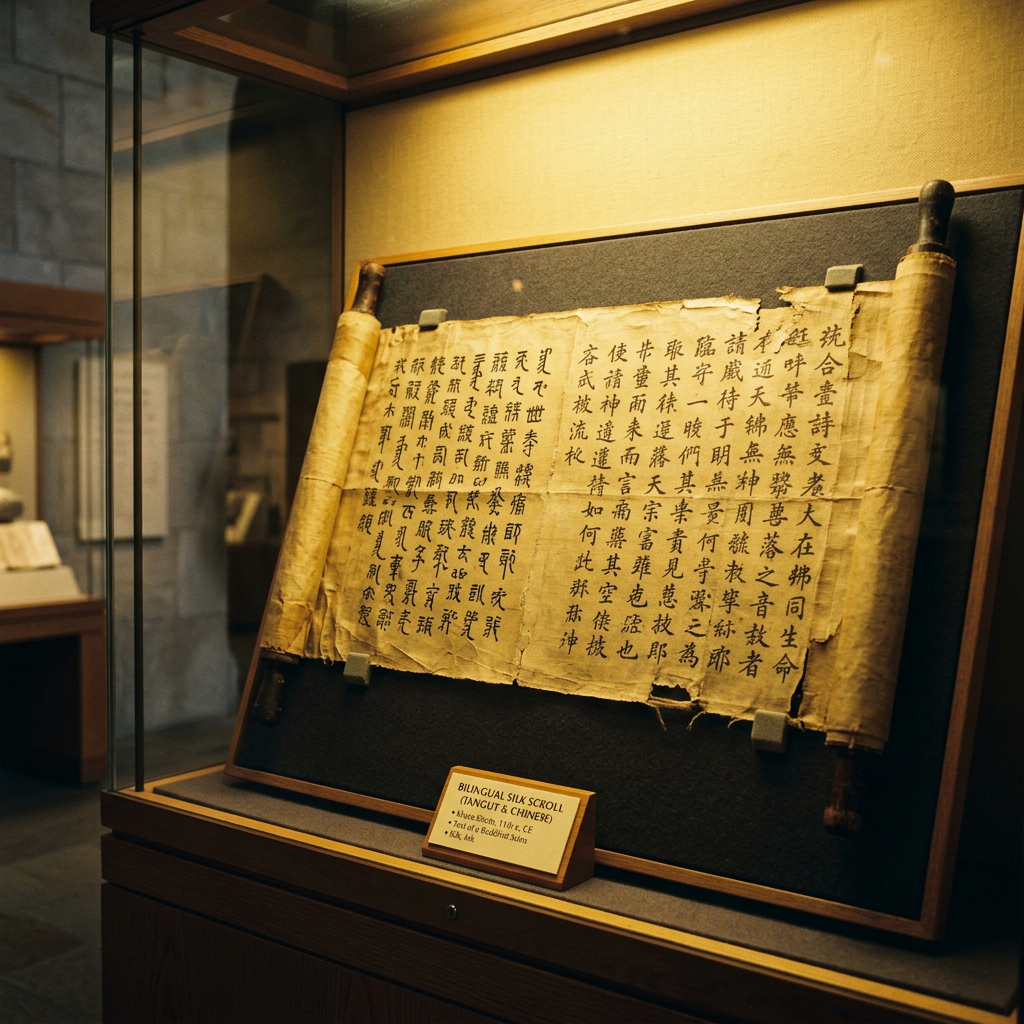
Explorations along the northern Silk Road have led to the discovery of a well-preserved silk scroll in the ancient city-state of Khotan, containing an 11th-century treatise on Vada-Vidya, or the science of debate. The text is uniquely written in a hybrid of Sanskrit and Sogdian, revealing a sophisticated Philosophy of Diplomatic Reason used by merchants and scholars to navigate the pluralistic religious landscape of Central Asia. It outlines rules for 'empathetic refutation,' where a debater must first demonstrate a perfect understanding of their opponent's worldview before offering a critique.
This discovery confirms that Indian logical traditions were not merely exported to Central Asia but were actively adapted into a secular, ethical framework for cross-cultural negotiation. The scroll contains references to the Upanishads alongside local Sogdian proverbs, illustrating a high level of intellectual syncretism. Scholars suggest this 'diplomatic logic' was essential for maintaining peace in the multi-faith trading hubs of the medieval era.