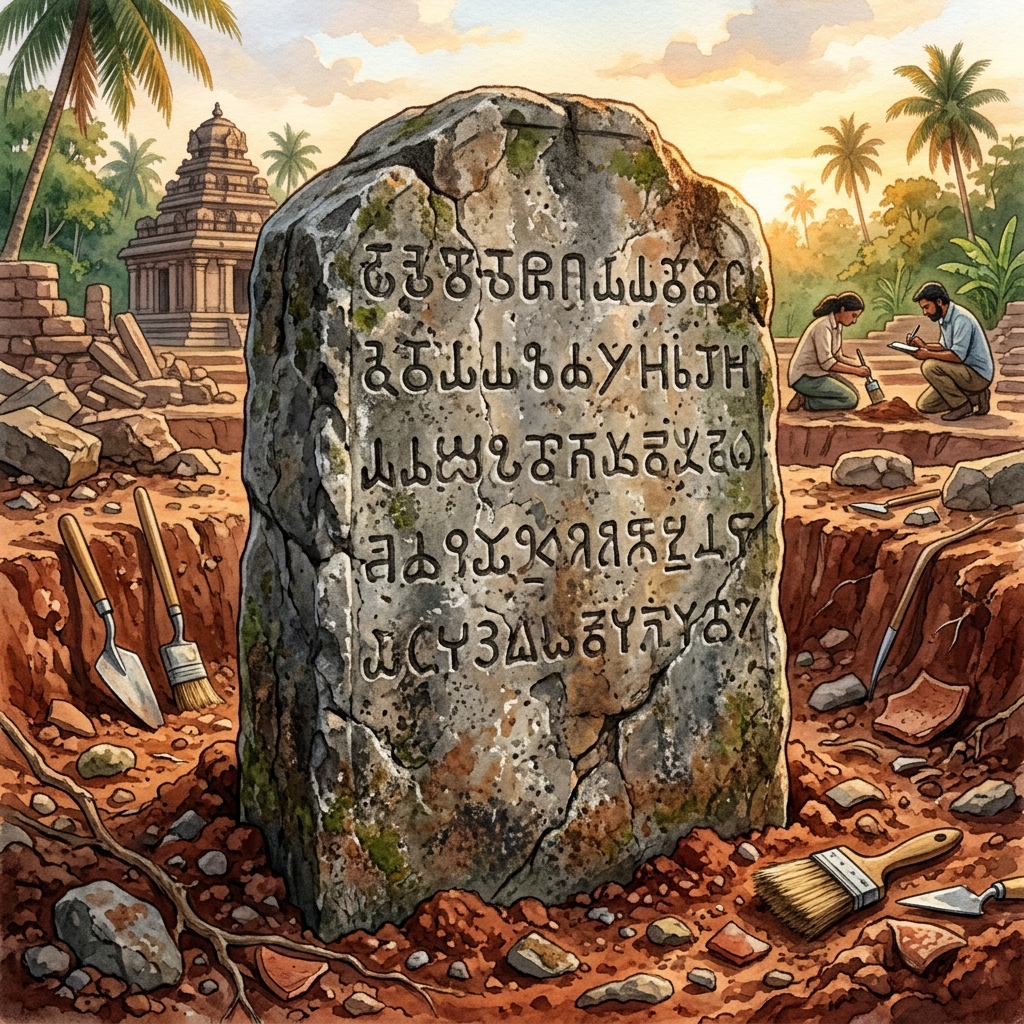
Archaeologists excavating a previously undisturbed site near Madurai have unearthed a series of stone stelae inscribed with the Atma-Sutra, a text that dates back to the 4th Century BCE. These inscriptions are written in an early form of Brahmi script and represent one of the oldest physical records of philosophical discourse in Southern India. The text outlines a unique synthesis between early Vedic notions of the Atman (Self) and local Dravidian virtue ethics, suggesting a much earlier period of intellectual exchange than previously documented.
Scholars from the Archaeological Survey of India (ASI) note that the inscriptions focus heavily on the relationship between individual discipline and cosmic order. Unlike contemporary texts from the northern plains, the Madurai Atma-Sutra emphasizes the role of the householder in achieving spiritual equilibrium, rather than focusing solely on ascetic renunciation. This discovery provides a critical new data point for understanding the diverse evolution of Sanatan Dharma across the Indian subcontinent.