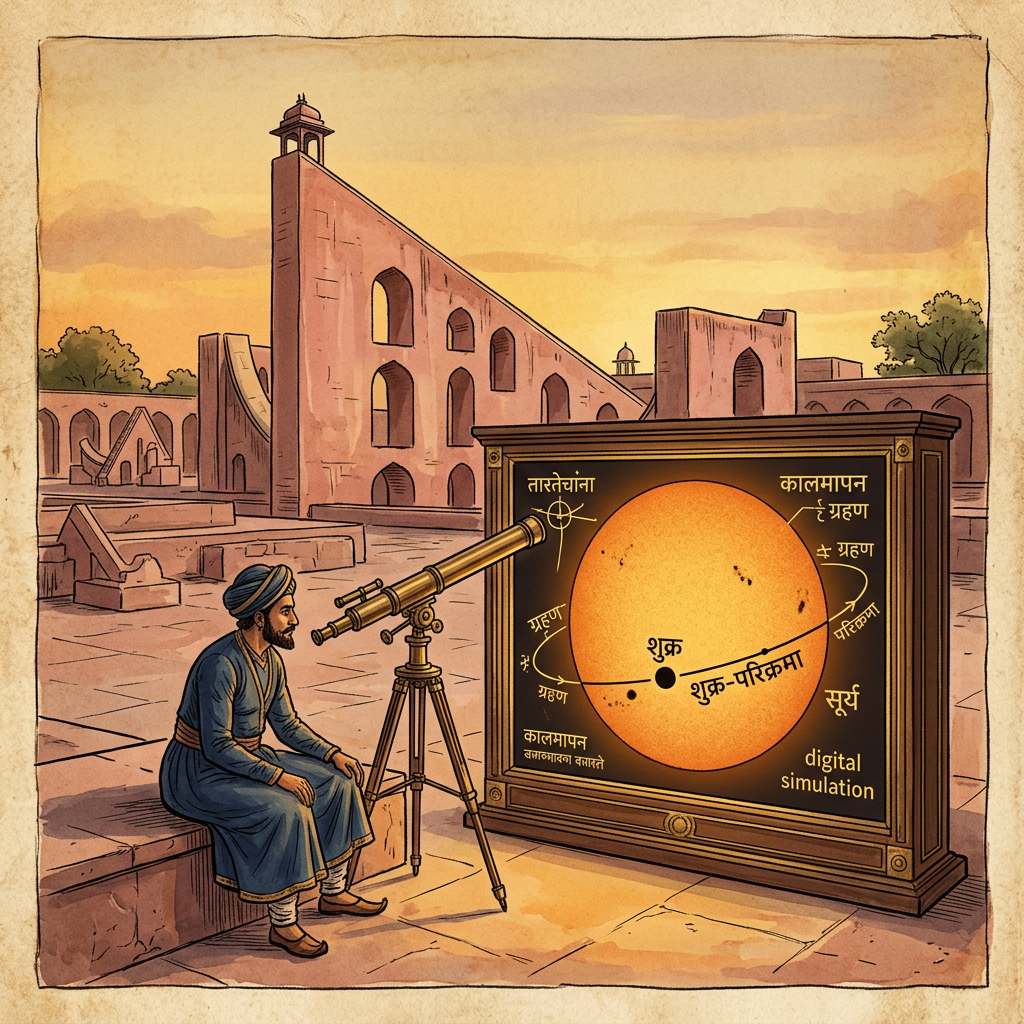
A breakthrough study published in the Journal of Ancient Astronomical Systems has identified specific descriptions in the Yajurvedic ritual texts that correspond to a rare astronomical event: the Transit of Venus. Researchers used high-precision computational models to simulate celestial alignments from the late 3rd millennium BCE, finding a perfect match between the ritual timing described in the layers of the Taittiriya Samhita and the transit that occurred in 2800 BCE.
The study suggests that ancient observers possessed sophisticated methods for tracking planetary movements and used ritual architecture to mark long-term astronomical cycles. This research challenges current timelines regarding the depth of observational precision in early Indian science, indicating that planetary transits were systematically recorded centuries earlier than previously theorized.