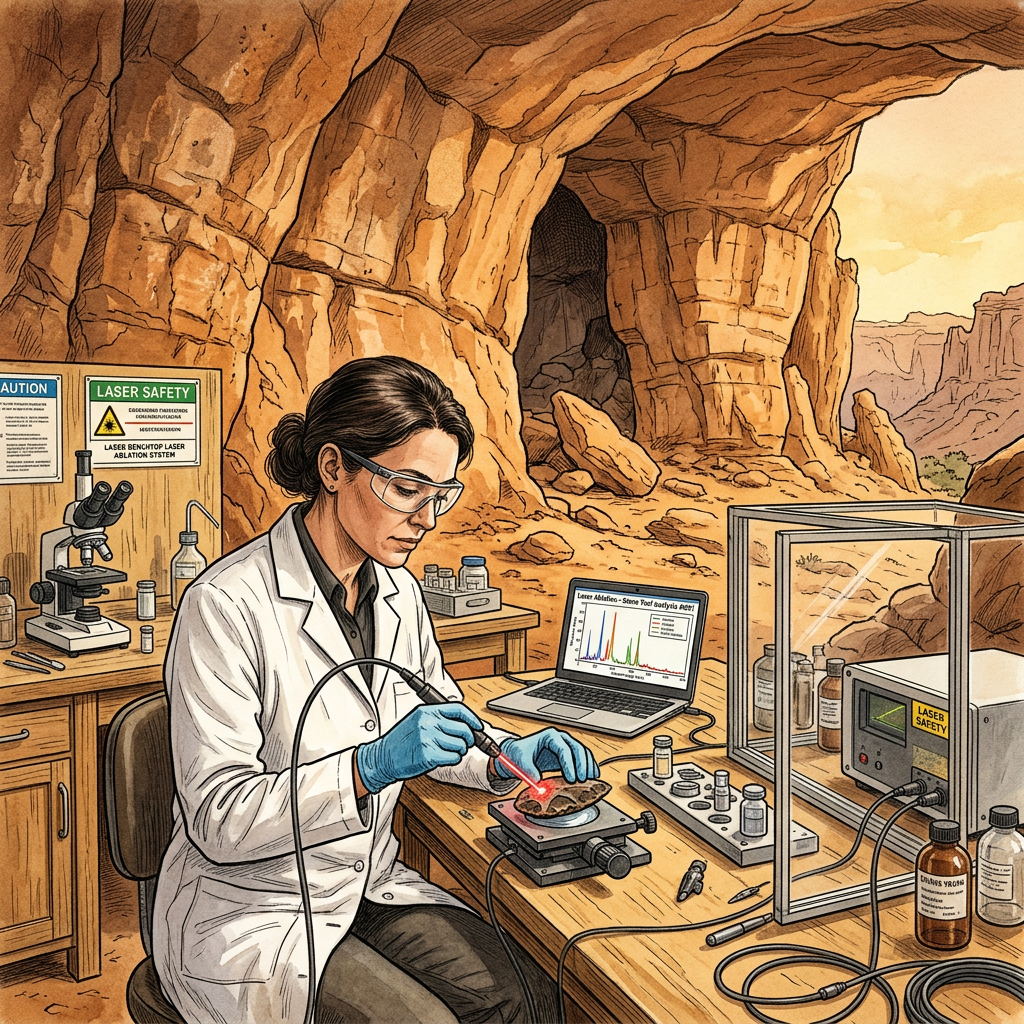
Researchers at the National Institute of Geo-Archaeology have applied a novel Calcium-41 dating technique to calcium carbonate crusts found on stone tools in the Vindhya Range. The results refine the chronology of human occupation in Central India, pushing back the use of refined microlithic toolkits to 85,000 years ago, significantly earlier than previous estimates.
This new methodology overcomes the limitations of traditional radiocarbon dating, which is often unreliable for sites older than 50,000 years. The findings support the 'Southern Dispersal' theory, suggesting that early modern humans occupied the Indian interior during a period of relative climatic stability, developing specialized toolkits to exploit the diverse flora and fauna of the Vindhyan plateau.