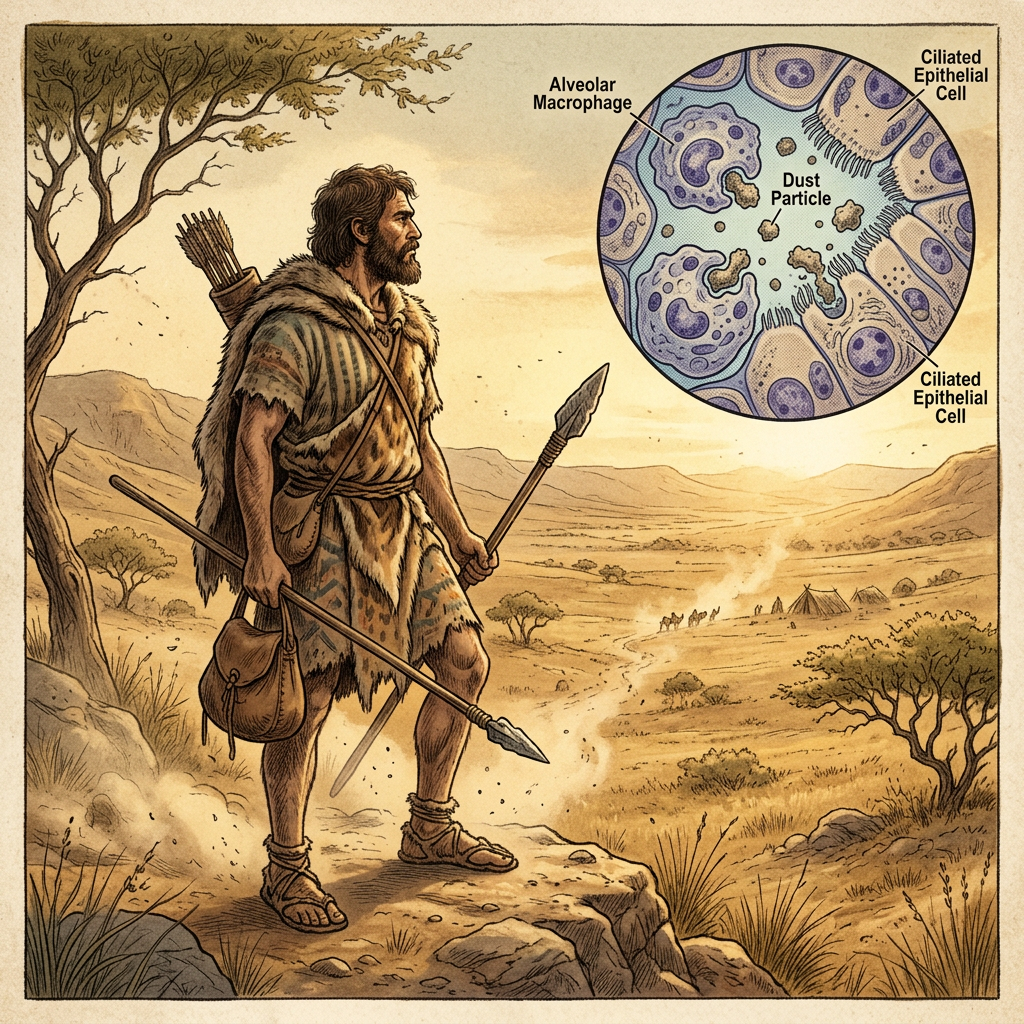
A comprehensive paleogenetic study of remains found in the Malwa region has revealed a unique genetic adaptation to high-silica dust exposure in Late Pleistocene populations. The researchers identified specific variations in the lung surfactant protein genes that likely protected early foragers from respiratory inflammation caused by the frequent dust storms of the arid post-glacial period.
The study suggests that the inhabitants of Central India developed localized genetic resilience to harsh atmospheric conditions 12,000 years ago. This discovery highlights the role of environmental pressures in shaping the genomic diversity of South Asian populations and provides a new perspective on how prehistoric communities survived abrupt climatic shifts at the end of the last Ice Age.