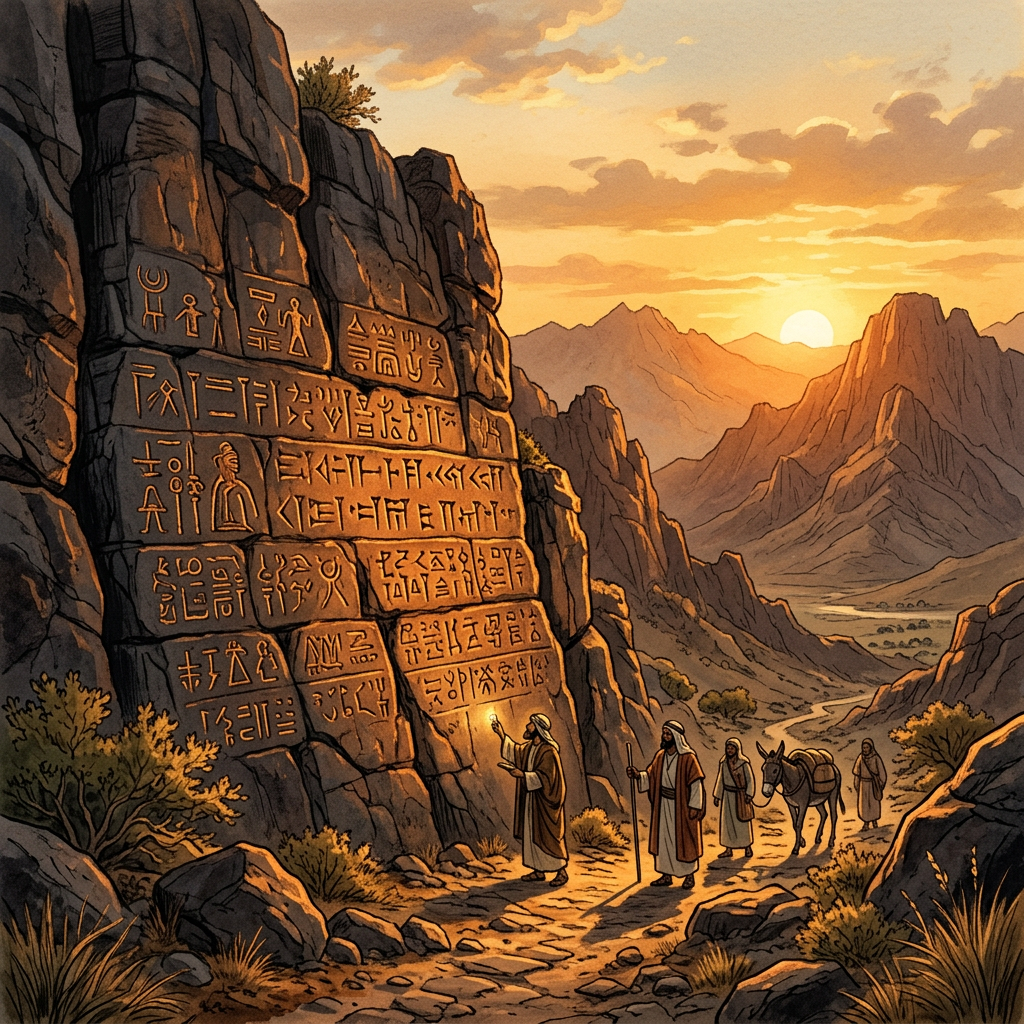
A series of rock-cut inscriptions discovered in the Sahyadri Mountains has revealed an early 6th-century philosophical treatise named 'Atma-Vimarsha'. The text provides a non-dualist (Advaita) interpretation of social ethics, arguing that the recognition of the "Universal Self" (Atman) must lead to the abolition of hierarchical distinctions in civic life. This discovery suggests that Advaita philosophy had practical, egalitarian applications long before its systematic formalization in the 8th century.
The inscriptions are carved in a transitional Brahmi-Kadamba script and are accompanied by symbols representing the unity of various elemental forces. Scholars believe this find proves the existence of a robust, localized tradition of philosophical radicalism in the Western Ghats that influenced later social reform movements in South India.